Category: PMP

  • The PMP Exam Content Outline (ECO): A Deep Dive into the 2021 vs. 2026 Updates

    The PMP Examination Content Outline (ECO) is the backbone of the PMP certification exam. While many candidates focus heavily on the PMBOK Guide, it is actually the ECO that defines what is tested in the exam.

    Recently, PMI released an updated PMP Examination Content Outline in July 2026, replacing the current January 2021 ECO. This update brings structural shifts, domain weight changes, task restructuring, and a broader emphasis on business acumen, governance, AI awareness, sustainability, and value delivery. In this comprehensive article, we will:

    • Explain the purpose of the ECO
    • Explain why the ECO (not PMBOK) defines your exam
    • Compare both versions strategically
    • Explore the January 2021 ECO in detail
    • Explore the July 2026 ECO in detail
    • Deep dive into the 2026 ECO changes
    • What this means for exam preparation (new exam format and question types)
    • Explain AI, sustainability, governance additions
    • Eligibility changes
    • Provide preparation strategy recommendations

    What is the PMP Exam Content Outline (ECO)?

    The ECO is developed through a Job Task Analysis (JTA) to ensure the exam reflects real world project management practices.

    Both versions of the PMP Examination Content Outline make it explicitly clear that the PMP exam is based upon real world job responsibilities rather than theoretical knowledge. The exam is designed around scenario based questions that reflect practical project situations, requiring candidates to think and respond as they would in actual professional environments. Each question is carefully mapped to the specific tasks and enablers defined in the ECO, ensuring that what is tested directly corresponds to the competencies expected of practicing project managers. Importantly, the exam evaluates a candidate’s ability to apply concepts rather than simply memorize definitions or processes.

    As emphasized in the January 2021 ECO introduction and reiterated in the July 2026 version, the PMP examination is aligned with ISO/ANSI 17024 standards and developed in accordance with internationally recognized psychometric best practices, reinforcing its credibility, fairness, and global professional rigor.

    Your PMP Exam Is NOT Based on PMBOK

    This is one of the most misunderstood facts. “The PMP exam is never based on any book, including PMBOK. The exam is based on the Exam Content Outline (ECO).” PMBOK is just a reference book, the ECO defines what is tested!!

    Even with the release of PMBOK 8th Edition, the exam only changes when the ECO changes which it officially does in July 2026.

    The January 2021 ECO (Valid until mid-2026)

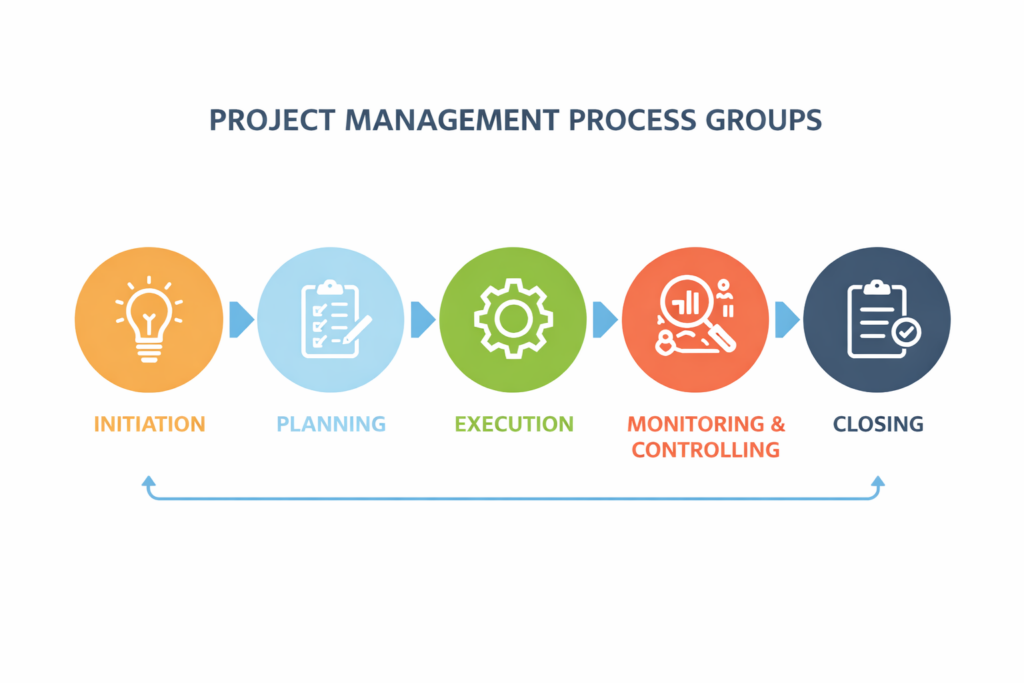
    Prior to January 2021, the PMP exam was structured around the traditional five process groups (Initiating, Planning, Executing, Monitoring & Controlling, and Closing), and questions were mapped to these categories much like the way the PMBOK Guide organizes project activities, with each group representing stages in the project lifecycle. However, beginning in January 2021 PMI shifted away from this process group orientation to a three domain framework (People, Process, and Business Environment), that aligns more closely with the PMI Talent Triangle and real world project leadership responsibilities.

    DomainWeight
    People42%
    Process50%
    Business Environment8%

    What This Meant

    Under the 2021 Exam Content Outline, the PMP exam placed a strong emphasis on leadership and team dynamics (people), while also maintaining a significant focus on project management processes (process). In contrast, strategic business knowledge received comparatively minimal coverage (Business Environment), with Business Environment questions accounting for only about 12 to 15 questions in total.

    Exam Structure

    • 180 questions
    • 170 scored
    • 240 minutes
    • 10 unscored pretest questions
    • 50% predictive and 50% agile-hybrid mix

    Tasks

    Domain IDomain IIDomain III
    People (42%)Process (50%)Business Environment (8%)
    Managing conflictExecute project with urgencyPlan and manage compliance
    Leading teamsManage communicationsEvaluate and deliver benefits/value
    Supporting team performanceAssess and manage risksAddress external business changes
    Empowering team membersPlan and manage budgetSupport organizational change
    Ensuring trainingPlan and manage schedule
    Building teamsPlan and manage scope
    Removing impedimentsManage changes
    Negotiating agreementsPlan procurement
    Collaborating with stakeholdersEstablish governance
    Engaging virtual teamsManage issues
    Defining ground rulesPlan closure
    Emotional intelligence
    January 2021 ECO (Valid until mid-2026)

    The July 2026 ECO (Valid after mid-2026)

    PMI has redesigned the exam to reflect how project managers operate in modern organizations. Project management is no longer just about time and cost, it is about delivering value and aligning with business strategy. Therefore, the weightage of Business Environment (Domain III) has jumped from 8% → 26%. The project manager is now positioned as a strategic value leader, not just a delivery manager.

    Question Types

    • Multiple choice
    • Multiple response
    • Drag-and-drop
    • Case study/practicum style questions

    New Exam Structure

    • 180 questions
    • 170 scored
    • 240 minutes
    • 10 unscored pretest questions
    • 40% predictive and 60% agile-hybrid mix (Hybrid now receives stronger emphasis)

    Tasks

    Domain IDomain IIDomain III
    People (33%)Process (41%)Business Environment (26%)
    Develop a common visionDevelop integrated project management planDefine and establish governance
    Manage conflictsDevelop/manage scopePlan/manage compliance (including sustainability)
    Lead the project teamEnsure value-based deliveryManage and control changes
    Engage stakeholdersPlan/manage resourcesRemove impediments/manage issues
    Align stakeholder expectationsPlan/manage procurementPlan/manage risk
    Manage stakeholder expectationsPlan/manage finance (renamed from cost)Continuous improvement
    Help ensure knowledge transferPlan/optimize qualitySupport organizational change
    Plan and manage communicationPlan/manage scheduleEvaluate external business environment changes
    Evaluate project status
    Manage project closure
    July 2026 ECO (Valid after mid-2026)

    Structure Comparison

    The domains remain the same but the weight distribution changes dramatically. This is the biggest strategic shift. Business Environment jumped from 8% to 26%.

    Domain2021 Weight2026 Weight
    People42%33%
    Process50%41%
    Business Environment8%26%

    Strategic Insight: Evolution of the Project Manager

    The shift from 2021 to 2026 reflects a philosophical evolution. The PMP exam is aligning with modern enterprise expectations.

    Old perception: Project Manager = Process Manager

    New perception: Project Manager = Value Leader + Strategic Integrator + Governance Partner

    Final Thoughts

    The PMP ECO is not just a document, it defines the professional identity of a PMP. The 2021 ECO emphasized leadership and process execution. The 2026 ECO elevates the role toward strategy alignment, business value, governance responsibility, sustainability awareness, and enterprise integration.

    PMI is clearly signaling that Project Managers must think like business leaders. If you are preparing for PMP, do not just memorize ITTOs or agile ceremonies. You need to understand why the project exists, how value is measured, how governance impacts decisions, how external environment shapes scope, and how sustainability and compliance affect delivery.

    The future PMP is not just certified, it is strategically empowered!

  • PMP Certification Syllabus Explained: Your Step-by-Step Guide to Success

    PMP Certification Syllabus Explained: Your Step-by-Step Guide to Success

    Are you ready to take your project management career to the next level? PMP certification is one of the most respected certifications worldwide. It is recognized by organizations and professionals alike for its validation of advanced-level knowledge in project management. Passing the PMP exam can lead to better career opportunities and higher salaries. PMP certification can also lead to leadership positions in projects and industries.

    Before you begin your journey to PMP certification, it is essential to know the PMP certification syllabus. This is your roadmap to success. This blog post will take you through the PMP certification syllabus and provide you with essential tips on how to prepare for the exam.

    What is the PMP Certification Syllabus?

    The PMP certification syllabus is a roadmap that outlines all the topics and skills you need to know to pass the exam. It is based on the PMBOK Guide and focuses on three key domains:

    1. People: Managing and leading project teams
    2. Process: Technical aspects of project management
    3. Business Environment: Aligning projects with organizational strategy

    The syllabus helps candidates understand the scope of the exam and prepares them to handle real-world project challenges.

    People Domain

    The People domain emphasizes leadership and team management skills. Successful project managers must be able to motivate teams, resolve conflicts, and engage stakeholders effectively. Key topics include:

    • Leading teams and fostering collaboration
    • Conflict resolution strategies
    • Motivating team members to perform at their best
    • Communicating effectively with stakeholders
    Project manager leading a team meeting during project planning

    Mastering the People domain is crucial because strong leadership directly impacts project success.

    Process Domain

    The Process domain covers the technical knowledge and tools needed to manage projects successfully. It includes topics such as:

    • Project integration, scope, time, and cost management
    • Quality assurance and control
    • Risk identification, analysis, and mitigation
    • Procurement and resource management

    Focusing on the Process domain will help you understand how projects move from planning to execution and how to measure success along the way.

    The Process domain covers the technical knowledge and tools needed to manage projects successfully, including integration, scope, time, and cost management. For a deeper understanding of how PMBOK 8 balances structure and agility in project management, you can read our detailed blog on PMBOK 8 Edition – The Perfect Balance Between Structure and Agility.

    PMP process groups including initiation, planning, execution, monitoring & controlling, and closing

    Business Environment Domain

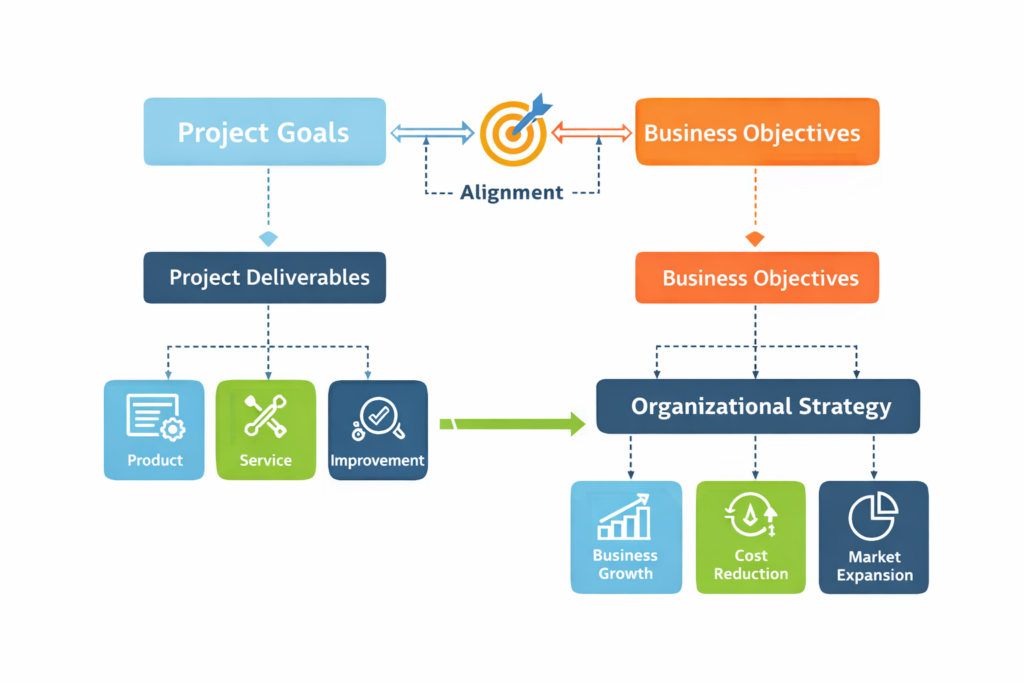
    The Business Environment domain focuses on how projects align with organizational goals and strategies. This domain ensures that project managers consider the bigger picture, including compliance, value delivery, and benefits realization. Key topics include:

    • Understanding organizational culture and structure
    • Regulatory compliance and governance
    • Measuring project performance in terms of business value
    Project goals aligned with business strategy chart

    The Business Environment domain teaches you to make decisions that benefit both the project and the organization.

    How to Use the PMP Certification Syllabus for Exam Preparation

    1. Studying each domain in detail, starting from the weakest area
    2. Breaking down the syllabus into smaller topics and studying one topic at a time
    3. Making use of multiple resources to study for the PMP
    4. Joining a structured training program to guide you in your PMP journey
    5. Regularly giving mock tests to assess and improve your understanding

    Frequently Asked Questions About the PMP Certification Syllabus

    Q1: What are the main domains of the PMP certification syllabus?
    The syllabus covers three domains: People, Process, and Business Environment.

    Q2: Is the syllabus the same worldwide?
    Yes, the PMP certification syllabus is standardized by PMI and applies globally.

    Q3: Can I focus only on one domain for the exam?
    No, exam questions are spread across all three domains, so comprehensive preparation is required.

    Q4: How do I apply the syllabus to real projects?
    By practicing techniques in real or simulated projects while studying the syllabus. You can also enroll in a structured training program that provides practical case studies and real-world examples. For complete guidance, you can visit our PMP Certification page to explore detailed course support and preparation resources.

    Key Tips for PMP Exam Success

    • Follow a daily study schedule based on the syllabus
    • Focus on weak domains and practice scenario-based questions
    • Use online resources and training programs to strengthen understanding
    • Regularly review PMBOK concepts and past exam questions

    By following the syllabus step-by-step, you will not only prepare for the exam but also develop the skills needed to manage projects successfully.

    Conclusion

    Understanding the PMP certification exam and becoming a successful project manager is to understand the PMP certification syllabus. This is where a detailed study of all the domains will help you prepare and give you confidence to face the PMP certification exam.

    To know more about PMP certification, for comprehensive guidance and professional training, visit our PMP certification page to explore our courses and resources.

  • Critical Path Method (CPM): A Complete Guide for Project Success

    Critical Path Method (CPM): A Complete Guide for Project Success

    Project management is all about understanding which activities matter the most, how tasks are interconnected, and how delays ripple through an entire project. This is where the Critical Path Method (CPM) becomes a game changer.

    Activity = A scheduled piece of work that consumes time and possibly resources. It has duration, start & finish dates, and dependencies. It is also the part of the schedule network diagram and appears in CPM (Critical Path Method).

    “Task” is a more generic word. A unit of work to be performed.

    Oracle Primavera P6 uses the term “Activity” and the Microsoft Project uses the term “Task”. But technically they both represent the same concept.

    Whether you are preparing for the PMP exam or managing a real world construction, IT, or business project, mastering CPM will give you clarity, control, and confidence.

    What Is the Critical Path Method?

    The Critical Path Method (CPM) is a project scheduling technique developed in the late 1950s by Morgan Walker and James E. Kelley Jr.. It was first used at DuPont to solve scheduling inefficiencies and bring delayed projects back on track.

    Critical Path Method helps us:

    • Identify the longest sequence of dependent activities
    • Determine the minimum time required to complete a project
    • Understand which activities cannot be delayed
    • Calculate slack (float) for non-critical tasks

    Think of a group of friends planning to leave a restaurant. Everyone must finish eating before they leave. The slowest eater determines when the group can depart. That slowest eater represents the critical path.

    Why Is CPM So Important?

    Every project has:

    • Multiple activities
    • Dependencies between tasks
    • Limited resources
    • Strict deadlines

    Without a structured method, managing these elements becomes chaotic. CPM allows you to:

    • Visualize task relationships
    • Predict completion time
    • Identify risk areas
    • Optimize scheduling decisions

    For PMP aspirants, CPM is especially important because questions frequently test your understanding of:

    • Forward pass
    • Backward pass
    • Float (Slack) calculation
    • Critical path identification

    Understanding Network Diagrams (Activity on Node)

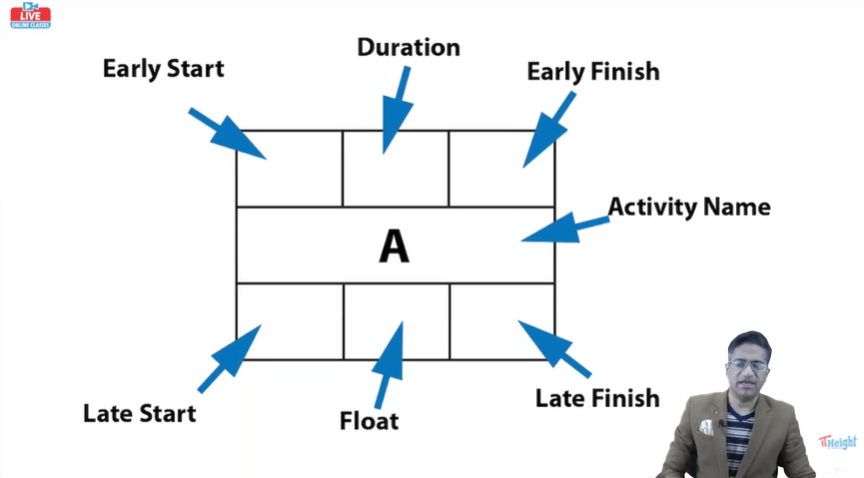
    CPM uses a network diagram, typically drawn using the Precedence Diagramming Method (PDM). Each activity is represented by a box containing:

    • Activity Name
    • Duration
    • Early Start (ES)
    • Early Finish (EF)
    • Late Start (LS)
    • Late Finish (LF)
    • Total Float
    Activity is representation by a box

    This structured format helps project managers analyze schedule flexibility.

    The Four Types of Dependencies

    Understanding dependencies is essential before calculating the critical path.

    1. Finish-to-Start (FS)

    The most common dependency. Example: A wall must be built before it can be painted.

    2. Start-to-Start (SS)

    Task 2 cannot start until Task 1 starts. Example: A lecture must begin before students start taking notes.

    3. Finish-to-Finish (FF)

    Task 2 cannot finish until Task 1 finishes. Example: Final grading must finish before report cards are completed.

    4. Start-to-Finish (SF)

    Rarely used. Example: A new security shift must begin before the old one ends.

    The Six Steps of CPM

    1. Identify activities
    2. Sequence activities
    3. Draw the network diagram
    4. Estimate durations
    5. Perform forward and backward pass
    6. Identify the critical path

    Forward Pass: Calculating Early Dates

    The forward pass determines:

    • Early Start (ES)
    • Early Finish (EF)

    Rules:

    • ES of first activity = 0 (or Day 1, depending on method)
    • EF = ES + Duration
    • If multiple predecessors exist → choose the maximum EF

    Example

    If:

    • Activity A finishes on Day 5
    • Activity B depends on A

    Then:

    • B’s ES = 5
    • If B duration = 4 → EF = 9

    If Activity F depends on:

    • D (finishes at 15)
    • E (finishes at 13)

    Then:

    • F starts at 15 (maximum value)

    This ensures no dependency is violated.

    Backward Pass: Calculating Late Dates

    The backward pass determines:

    • Late Finish (LF)
    • Late Start (LS)

    Rules:

    • Start from project completion time
    • LS = LF − Duration
    • If multiple successors exist → choose the minimum LS

    This tells us how much delay is allowed without affecting project completion.

    What Is Float (Slack)?

    Float or Slack represents scheduling flexibility.

    Total Float Formula:

    TF = LS − ES (OR) TF = LF − EF

    If slack = 0 → the activity is critical.

    Real-Life Analogy

    Imagine five friends leaving together. If one person is extremely slow, others may have spare time to make a quick phone call. That extra time is float. The slowest person has zero float, it means any delay affects everyone.

    Identifying the Critical Path

    The critical path is:

    • The longest path through the network
    • The shortest possible project duration
    • The path with zero total float

    If any activity on this path is delayed, the entire project is delayed. For example: If two paths exist:

    • A → B → D → F (19 days)
    • A → C → E → F (17 days)

    The 19-day path is critical.

    Total Float vs Free Float

    Many students confuse these two.

    Total Float

    Maximum delay allowed without affecting project completion.

    Free Float

    Delay allowed without affecting the next activity. They are often equal, but not always.

    Plus-Minus One Method vs Zero-Day Method

    There are two common calculation styles:

    Plus-Minus One Method

    • Starts from Day 1
    • Uses +1 and −1 adjustments
    • Common in academic exams

    Zero-Day Method

    • Starts from Day 0
    • Simple addition and subtraction
    • No +1 or −1 confusion

    Both methods produce the same critical path and float values.

    CPM vs PERT

    CPM is often compared with Project Management Institute-referenced scheduling techniques like PERT. Following are the key difference:

    CPMPERT
    Single time estimateThree-point estimate
    DeterministicProbabilistic
    Used for predictable projectsUsed for uncertain projects

    CPM uses a single duration estimate, whereas PERT calculates duration using:

    • Optimistic time
    • Most likely time
    • Pessimistic time

    Benefits of CPM

    Following benefits CPM provides:

    • Clear schedule visibility
    • Risk identification
    • Better task prioritization
    • Improved resource allocation
    • Strong monitoring control

    It also works seamlessly with Gantt charts, modern project management software can switch between both views instantly.

    Common Mistakes Students Make

    • Forgetting to choose the maximum EF in forward pass
    • Forgetting to choose the minimum LS in backward pass
    • Confusing float formulas
    • Thinking critical path means “shortest path”

    Remember: Critical path is the longest path that determines the earliest project completion.

    Final Thoughts

    The Critical Path Method is not just an academic formula, it is a strategic decision making tool. It allows project managers to think logically, prioritize intelligently, and manage delays proactively. If you truly want to master scheduling concepts like CPM, PERT, float analysis, and real PMP exam style numerical questions, consider enrolling in the best PMP certification training where these concepts are taught with clarity, real life examples, and exam focused techniques.

    Mastering CPM is not about memorizing formulas, it is about understanding how projects breathe, move, and succeed. Once you understand that… project management becomes far less stressful and far more powerful.

  • The Complete Guide to Project Charter

    The Complete Guide to Project Charter

    In the world of project management, clarity is power. Many projects struggle not because teams lack talent, but because they lack direction. That direction begins with one powerful document, “the Project Charter”. Whether you are preparing for PMP certification, leading IT projects, managing Lean Six Sigma initiatives, or working in client vendor environments, understanding the Project Charter is essential. It is not just paperwork. It is the birth certificate of your project. Let us explore what a Project Charter truly is, how it differs from other documents, why it matters so deeply, and how modern tools such as Artificial Intelligence (AI) can enhance its creation.

    Understanding the Business Case: The Strategic Beginning

    Before a project is even initiated, organizations first ask an important question: Why should we do this project? This is where the Business Case comes in. A Business Case is a strategic document created even before the project officially starts. It outlines:

    • The business problem
    • The justification for solving it
    • Feasibility findings
    • Expected benefits
    • Strategic alignment

    The Business Case is created in the pre project stage by business stakeholders. Without it, a project would lack justification and approval.

    For example, imagine a company noticing declining productivity in its production department. Before launching any improvement initiative, leadership would analyze the financial loss, operational inefficiencies, and potential return on investment (ROI). That analysis becomes the Business Case. Only after approval of Business Case the project moves forward.

    Business Case is same as feasibility report?

    No. Feasibility is part of Business Case, but Business Case is broader and strategic.

    Here is the simplest way to remember the key difference:

    • Feasibility Report → Can we do it?
    • Business Case → Should we do it?

    In many organizations, the feasibility analysis is included inside the Business Case document. Usually, feasibility analysis is prepared as a separate report and later summarized within the Business Case. A feasibility study is often a component of the Business Case.

    What Is a Project Charter?

    Once the Business Case is approved and the organization decides to proceed, the Project Charter is created. A Project Charter is a formal document that officially authorizes the existence of a project. It grants authority to the Project Manager to use organizational resources and begin work.

    If the Business Case answers why we should do the project, the Project Charter answers what we are going to do and who is responsible. It marks the official start of the project lifecycle. Without a Project Charter, the project does not formally exist.

    Why the Project Charter Matters So Much

    The Project Charter performs several powerful functions:

    • It provides formal authorization.
    • It names the Project Manager.
    • It aligns stakeholders on objectives.
    • It defines high level scope boundaries.
    • It sets expectations regarding budget and timeline.

    Imagine you are assigned as Project Manager, and someone questions your authority to allocate resources. The Charter protects you. It clearly states your role and authority level.

    It also prevents confusion. Everyone understands what the project includes and, just as importantly, what it does not include. This clarity eliminates many future conflicts.

    Project Charter vs Business Case

    Many professionals confuse these two documents. Here is the difference in simple language:

    • The Business Case justifies the project.
    • The Project Charter authorizes the project.
    • The Business Case focuses on business value and feasibility.
    • The Project Charter focuses on high level direction and leadership authority.

    Sometimes the Business Case is included within the Charter. Sometimes it exists as a separate document. Both approaches are valid, depending on organizational practice.

    Project Charter vs Project Management Plan

    Another common confusion occurs between the Project Charter and the Project Management Plan.

    The Charter is brief and high level, whereas the Project Management Plan is detailed and comprehensive. The Charter may be two to five pages long. The Management Plan can be extensive and include multiple subsidiary plans such as:

    • Scope Management Plan
    • Quality Management Plan
    • Schedule Management Plan
    • Financial Management Plan
    • Stakeholder Engagement Plan
    • Resource Management Plan
    • Procurement Management Plan
    • Communications Management Plan
    • Risk Management Plan

    The Charter grants authority, however the Management Plan explains how the work will be executed. If the Charter is the foundation, the Management Plan is the architectural blueprint.

    Core Elements of a Project Charter

    A well written Project Charter typically includes the following components:

    Project Description

    This explains the purpose of the project. It answers why the project exists and what it aims to achieve at a high level.

    Business Case Summary

    A brief explanation of the strategic importance and expected value.

    Project Objectives

    Clear high level goals. Often written using SMART criteria to ensure clarity.

    What Is SMART Criteria?

    SMART is a framework used to write clear, measurable, and achievable goals.
    It ensures that objectives are not vague but structured and actionable. SMART stands for:

    • S – Specific
    • M – Measurable
    • A – Achievable
    • R – Relevant
    • T – Time Bound

    Scope Overview

    A summary of what is included and excluded. For example, launching a mobile application for online shopping without defining detailed features.

    Key Deliverables

    Major outputs the project must produce.

    Assigned Project Manager

    The person responsible for leading the project.

    Milestone Summary

    Major timeline targets such as completion by first quarter of next year rather than exact dates and times.

    Budget Summary

    High level financial boundaries, for example a maximum cap of one hundred thousand dollars.

    Assumptions and Constraints

    Assumptions might include resource availability.
    Constraints may involve time, budget, or regulatory limitations.

    High Level Risks

    Major threats that could impact success.

    Stakeholders

    Key individuals and groups involved in or affected by the project.

    Approval Section

    Formal sign off from sponsor or authorized stakeholders.

    A well constructed Charter saves time during execution because many misunderstandings are prevented from the beginning.

    Using AI Tools to Create a Project Charter

    Modern AI tools such as ChatGPT can dramatically reduce the effort required to draft a structured Project Charter. Instead of manually drafting each section and worrying about grammar, professionals can provide structured inputs and request:

    • A complete charter
    • SMART goal conversion
    • Simplified business case for executives
    • Risk and mitigation plans
    • Bullet point summaries

    However, there is an important caution. Artificial Intelligence enhances learning. It does not replace expertise. AI generated content must always be verified, customized, and validated before presentation. Treat AI as a strategic assistant, not a copy paste machine. When used wisely, it can save over fifty percent of our drafting time while improving clarity and structure.

    Project Lifecycle and Organizational Environment

    Projects do not operate in isolation. They exist within an organizational environment. Internal projects operate within one organizational system. Client vendor projects operate within two. Some complex projects involve multiple organizations. The Project Charter must align with this environment. For example, contract type affects constraints. A fixed price contract introduces strict budget boundaries. A time and materials contract allows flexibility. Understanding these realities strengthens the Charter and prevents unrealistic commitments.

    At ITHeight, you will gain a clear understanding of Contract Types and Delivery Methods under the Procurement performance domain. As you progress in the training, through the core topics of Project Management, you will develop the confidence and competence required to manage projects in a structured and organized manner. Our comprehensive approach not only prepares you to lead real world projects effectively but also equips you to pass the PMP Certification exam with confidence and achieve an Above Target score.

    Risk Management Starts Early

    One critical practical insight is that risk management begins before the project even starts. Even during pre sales discussions, high level risks must be identified. For instance, if the project requires rare technical expertise that is not readily available in the market, this risk must be acknowledged before signing the Charter. Ignoring such realities can make the entire project infeasible.

    Stakeholders and the Project Charter

    Stakeholders include anyone who can affect or be affected by the project. This may include Sponsors, Clients, Project team members, Executives, Regulatory bodies, and Third party vendors. If a key stakeholder is overlooked, major issues may arise mid project, forcing expensive adjustments. The Charter aligns expectations early and establishes shared understanding.

    The Charter as Your North Star

    Once approved, the Project Charter becomes your guiding reference. Every major decision should align with it. If stakeholders demand additional features beyond the agreed scope, refer back to the Charter. If objectives change significantly, update the Charter formally and renegotiate timeline or budget accordingly. This discipline protects both the project and the Project Manager.

    A Practical Mindset for Real World Projects

    Project management is not about creating random deliverables. It is about achieving business objectives. A project is a temporary endeavor to create a unique result that serves a strategic goal.

    The Project Charter ensures that this strategic alignment remains visible from start to finish.

    It is short but powerful. Simple but authoritative. High level yet foundational. Without it, projects drift. With it, projects move with purpose.

    Final Thoughts

    A well written Project Charter:

    • Creates clarity
    • Grants authority
    • Aligns stakeholders
    • Defines boundaries
    • Reduces conflict
    • Strengthens leadership
    • Improves success probability

    Whether you are managing IT implementations, Lean Six Sigma initiatives, internal transformation projects, or client engagements, mastering the Project Charter is non negotiable. If you truly want to understand Project Charter, Business Case, Project Management Plan, and every essential artifact required to succeed in professional project management, then for best PMP certification join us!

    A strong foundation builds strong leaders. And every strong project begins with a clear Charter.

  • Organizational Project Management

    In today’s fast moving business environment, organizations are not struggling because they lack ideas. They struggle because they fail to connect ideas with execution. Strategies are written beautifully in boardrooms, yet projects on the ground often move in completely different directions. This disconnect is exactly what Organizational Project Management, commonly known as OPM, is designed to solve.

    The concept of Organizational Project Management is deeply rooted in the philosophy that strategy must not remain a document. Strategy must live through portfolios, programs, projects, and operations. According to the learning material provided, OPM is about executing an organization’s strategies by integrating portfolio management, program management, and project management into one aligned framework. Let us explore this powerful concept in a structured and meaningful way.

    What Is Organizational Project Management

    Organizational Project Management is a strategic framework that ensures all projects, programs, and portfolios within an organization are aligned with the organization’s mission, vision, and long term goals.

    In simple words, OPM answers one essential question: Are we working on the right projects that support our strategy?

    If an organization launches projects that do not contribute to its strategic direction, then resources are wasted, teams are confused, and performance declines. OPM prevents this misalignment.

    The Strategic Flow of Value

    To truly understand OPM, imagine a continuous cycle inside an organization. Everything begins with strategy. Leadership defines long term goals such as growth, sustainability, digital transformation, or market expansion. From strategy, the organization creates portfolios. Portfolios are collections of programs, projects and operational work that serve strategic objectives.

    Within portfolios, there are programs. Programs consist of related projects that are managed together to deliver greater benefits. Inside programs, there are projects. Projects create specific products, services, or results. Once projects are completed, they transition into operations. Operations sustain and maintain what projects have delivered.

    Then, performance feedback from operations flows back into strategy. Leadership reviews results and adjusts strategy accordingly. This creates a dynamic and living system where strategy, execution, and operational performance continuously inform one another.

    Understanding Projects, Programs, and Portfolios

    Many professionals confuse these three terms. Let us clarify them with clarity and depth.

    Projects

    A project is a temporary effort undertaken to create a unique product, service, or result. It has a defined start and end. For example, developing a new mobile application or constructing a new branch office is a project.

    Projects can stand alone, but often they are grouped into programs.

    Programs

    A program is a collection of related projects that are managed together to achieve benefits that cannot be achieved if managed separately. Imagine an organization that wants to improve environmental sustainability. It may launch:

    • A project to reduce carbon emissions
    • A project to implement energy efficient systems
    • A project to redesign packaging

    Managing these together as a program ensures synergy, optimized resource usage, and coordinated outcomes.

    Portfolios

    A portfolio is a collection of programs and projects grouped to meet strategic business objectives. Unlike programs, portfolio components do not need to be interdependent. They are connected by strategic purpose, not by operational relationship. For example, a portfolio titled Strategic Growth may include:

    • A digital transformation program
    • A market expansion project
    • A product innovation initiative

    The common thread is strategic alignment.

    OPM Is More Than Just Formal Projects

    OPM is that Organizational Project Management is often misunderstood as only managing formal projects governed by a PMO. In reality, organizations contain far more projects than those officially documented. There are informal projects, business unit initiatives, sales campaigns, marketing experiments, merger activities, and operational improvement efforts happening throughout the organization.

    If leadership only focuses on formal projects, they miss a large portion of execution reality. True Organizational Project Management considers:

    • Formal plan driven projects
    • Agile projects based on adaptive systems
    • Informal business initiatives
    • Operational improvement efforts

    OPM takes a comprehensive view rather than a narrow one.

    The Role of the PMO in Organizational Alignment

    The Project Management Office (PMO) plays a critical role in implementing OPM. However, sending a few managers for certification is not enough. Training must be contextual, practical, and aligned with organizational processes.

    Successful organizations tailor project management frameworks to their own culture, terminology, and operational systems. They do not copy large corporations blindly. They adapt principles to fit their own size and maturity.

    A PMO must understand leadership concerns, operational barriers, and execution challenges. Only then can it embed project management thinking throughout the organization.

    Common Strategic Pitfalls in Organizations

    Many organizations attempt strategy execution but fall into predictable traps.

    Too Many Goals

    When everything is a priority, nothing is a priority. Organizations must choose a primary objective and possibly one secondary objective. Clarity drives execution.

    Vanity Metrics

    Follower counts and superficial indicators do not guarantee revenue or value creation. Metrics must fund the mission.

    Strategy by Slogan

    Statements such as customer obsessed or innovation driven mean nothing unless translated into measurable behaviors and service standards.

    Copying Giants

    A small organization does not need the bureaucracy or structure of a multinational enterprise. Principles can be copied, overhead cannot.

    No Stop List

    Strategy is not only about what to pursue. It is equally about what not to do. A visible not doing list protects focus.

    Organizational Project Management enforces discipline in prioritization and execution.

    The Integration of Operations

    An often overlooked aspect of OPM is the integration of operations. Projects create deliverables. Operations sustain them. If operations are not considered while designing portfolios and programs, the organization risks creating solutions that cannot be maintained effectively.

    An aligned organization ensures that portfolios, programs, projects, and operations all support corporate objectives and stakeholder demands.

    Why OPM Matters for PMP Aspirants

    For PMP candidates, understanding OPM is crucial because it reflects strategic thinking beyond individual projects. PMP examination does not only test knowledge of processes. It evaluates whether you understand how projects contribute to organizational value. You must be able to answer:

    • How does this project align with strategy
    • How do portfolios prioritize investments
    • How do programs optimize interdependencies
    • How do operations sustain project outcomes

    Without understanding Organizational Project Management, project management remains tactical rather than strategic.

    The Real Power of OPM

    Organizational Project Management ensures:

    • Resources are allocated wisely
    • Projects support strategic goals
    • Leadership receives meaningful performance feedback
    • Competitive advantage is sustained
    • Waste is minimized
    • Execution excellence becomes cultural

    It transforms project management from an isolated technical function into a strategic enabler.

    A Final Reflection

    Imagine an organization running fifty projects at once. Without OPM, each team works hard but possibly in different directions. With OPM, every project, every program, and every portfolio becomes a deliberate step toward a shared destination. This is the beauty of Organizational Project Management. It brings coherence to complexity. It transforms ambition into structured progress.

    If you truly wish to master Organizational Project Management and understand how strategy flows through portfolios, programs, projects, and operations, structured and guided learning is essential. Join ITHeight to strengthen your strategic mindset and elevate your project management career with clarity and confidence.

  • Critical Path Method

    Project management is not merely about listing tasks and hoping everything falls into place. It is about understanding dependencies, calculating timelines with clarity, and ensuring that the entire project reaches completion at the earliest possible date. One of the most powerful tools that helps us achieve this clarity is the Critical Path Method, often referred to as CPM.

    In this comprehensive guide, we will connect it to real life examples so that you truly understand how CPM works and why it matters in your PMP journey. The concepts explained here are inspired by detailed learning material on Critical Path Method.

    What Is the Critical Path Method

    The Critical Path Method is a scheduling technique used to arrange project activities based on their dependencies and determine the earliest possible completion date of a project.

    In every project, some tasks can be performed simultaneously, while others must wait until previous tasks are completed. Managing these relationships mentally becomes impossible once the project grows in size. CPM provides a structured and visual way to understand:

    • Which activities depend on others
    • Which tasks can run in parallel
    • How long the entire project will take
    • Which activities cannot be delayed

    Think of it this way. If five people go out for dinner, the group can only leave once the slowest person finishes eating. That slowest person defines the earliest time the group can leave. In the same way, the longest sequence of dependent activities defines when the project can finish.

    Understanding Activity Relationships

    In project scheduling, activities are connected through relationships. The most common relationship is Finish to Start. This means one activity cannot begin until another finishes. For example:

    • Activity A must finish before Activity B starts.
    • Activity A must finish before Activity C starts.
    • Activity D cannot begin until both B and C are completed.

    Some activities may run in parallel. Others must wait. CPM helps us visualize this clearly instead of guessing.

    Forward Pass: Finding the Earliest Completion

    The first step in CPM is called the forward pass. This helps calculate:

    • Early Start
    • Early Finish

    Early Start is the earliest time an activity can begin.

    Early Finish is calculated as: Early Start plus Duration minus one.

    If Activity A takes five days and starts on Day 1, it finishes on Day 5. If Activities B and C depend on A, they can only start on Day 6.

    When multiple activities feed into a single activity, we select the maximum Early Finish among them to determine the next Early Start. Why maximum? Because the next activity must wait for all predecessor activities to finish.

    The slowest predecessor defines the start time.

    This forward pass gives us the earliest possible completion date of the project.

    Backward Pass: Identifying Flexibility

    Once we know the earliest completion date, we perform the backward pass to calculate:

    • Late Start
    • Late Finish

    Late Finish is the latest an activity can finish without delaying the project.

    Late Start is calculated by subtracting duration from Late Finish.

    This process reveals something powerful: flexibility.

    Float: The Hidden Cushion

    Float, also known as slack, is the amount of time an activity can be delayed without affecting the project completion date.

    If Early Finish and Late Finish are the same, float is zero.

    If Late Finish is greater than Early Finish, the difference is the float.

    Activities with zero float are extremely important. They cannot be delayed even by a single day. These activities form the critical path.

    Activities with float offer flexibility. You can reassign resources from them temporarily without affecting the final deadline.

    The Critical Path: Why It Is Critical

    The critical path is the longest path of dependent activities in the network.

    It determines the shortest possible time in which the project can be completed. Important characteristics of the critical path:

    • It has zero float in most practical cases.
    • Any delay in these activities directly delays the entire project.
    • It requires the closest monitoring and control.

    Just like the slowest person finishing dinner defines when the group leaves, the critical path defines when the project ends.

    A Simple Real Life Example

    Imagine you are preparing dinner. You need to:

    • Buy vegetables
    • Wash vegetables
    • Chop vegetables
    • Chop onions
    • Prepare seasoning
    • Cook everything together

    Some tasks can happen in parallel. Vegetables can be chopped while onions are being cut. But cooking cannot start until all preparation work is completed.

    If chopping onions takes longer than chopping vegetables, then onion preparation becomes critical. The entire cooking process must wait. This is exactly how CPM works!

    Why CPM Is Important for PMP Aspirants

    In the PMP examination, you are not expected to solve extremely complex network diagrams. However, you must understand:

    • How to calculate Early Start and Early Finish
    • How to perform backward pass
    • How to calculate float
    • How to identify the critical path

    The exam may ask:

    • Which activity has zero float
    • What happens if a critical activity is delayed
    • What is the project duration
    • Which activity can be delayed without affecting completion

    Understanding the concept deeply is more important than memorizing formulas.

    Common Confusions Cleared

    Many students mistakenly think the critical path is the shortest route. That is incorrect. In CPM, every activity must be completed. You are not selecting a shorter route and ignoring others. Instead, you are identifying the sequence that takes the longest time and governs project completion.

    Another confusion arises between early and late dates. Remember:

    Forward pass determines the earliest possible completion.

    Backward pass determines flexibility.

    Beyond CPM: Essential PMP Concepts to Know

    Alongside CPM, PMP aspirants must also understand related concepts such as:

    Data Gathering Techniques

    Projects rely on benchmarking, document analysis, brainstorming, interviews, and surveys to collect information.

    Estimation Techniques

    Common estimation methods include:

    • Analogous estimation
    • Parametric estimation
    • Bottom up estimation
    • Three point estimation

    Three point estimation uses pessimistic, optimistic, and most likely values to produce a realistic estimate.

    Risk Responses

    Project risks can be managed through:

    • Avoid
    • Mitigate
    • Transfer
    • Accept
    • Escalate

    Understanding how these interact with schedule management is essential.

    Contingency and Management Reserves

    Contingency reserve covers known risks.

    Management reserve covers unknown risks.

    These affect cost planning and overall project control.

    The Beauty of Structured Thinking

    The true power of Critical Path Method lies in structured thinking. It transforms chaos into clarity.

    Instead of asking: “When will we finish?”

    You confidently say: “If these activities are completed without delay, we will finish on Day 30.”

    That confidence is what separates a casual planner from a professional project manager.

    Final Thoughts

    Critical Path Method is not just a formula. It is a mindset. It teaches you to think in terms of dependencies, priorities, and consequences. When you understand CPM deeply, you stop reacting to delays and start anticipating them. You stop guessing timelines and start calculating them.

    If you want to master Critical Path Method along with all other PMP concepts in a structured, practical, and exam oriented manner, our comprehensive PMP training program is designed exactly for you. For best PMP certification join us!

    Success in project management begins with clarity. And clarity begins with understanding the critical path.

  • PMBOK 8 Edition – The Perfect Balance Between Structure and Agility

    PMBOK 8 Edition – The Perfect Balance Between Structure and Agility

    The world of project management has evolved dramatically over the past decade. From the rigid structure of PMBOK 6 to the principle driven philosophy of PMBOK 7, professionals across industries have witnessed significant transformation. Now, with the arrival of the A Guide to the Project Management Body of Knowledge (PMBOK Guide), the profession enters a new chapter that blends structure with flexibility, governance with agility, and tradition with innovation.

    If you felt confused navigating versions 6 and 7, you’re not alone! PMBOK 8 restores balance. It synthesizes the strengths of earlier editions while addressing modern realities such as hybrid delivery models, artificial intelligence, sustainability, and dynamic stakeholder expectations.

    PMBOK 8th Edition Explained: A New Era of Balanced Project Management

    Let’s explore what truly makes PMBOK 8 a milestone in project management.

    Why PMBOK 8 Exists

    The 8th edition was not a minor update. It was shaped by tens of thousands of practitioner insights, expert panels, and real-world feedback.

    The goal was simple yet ambitious to create a guide that reflects today’s fast moving, hybrid, AI enabled world while preserving the foundational structure that project managers value.

    Rather than swinging between extremes, rigid processes in version 6 and abstract principles in version 7, PMBOK 8 offers a thoughtful equilibrium.

    From Process Groups to Focus Areas

    One of the most noticeable changes is terminology. What were once called Process Groups are now known as Focus Areas. The familiar flow remains intact:

    • Initiating
    • Planning
    • Executing
    • Monitoring and Controlling
    • Closing

    However, these are no longer strict, linear steps. They are flexible guides that support predictive, agile, and hybrid approaches.

    Similarly, Knowledge Areas are now referred to as Performance Domains. A refined term that emphasizes outcomes rather than theoretical compartments.

    The Seven Performance Domains

    At the heart of PMBOK 8 are seven interconnected performance domains. These are not abstract ideas; they represent the real forces that shape project success.

    To understand them clearly, imagine you are developing a customer portal application. Each domain influences how that project unfolds.

    1. Governance

    Governance ensures alignment with organizational goals, policies, compliance requirements, and oversight structures.

    Before writing even a single line of code for your application, governance asks:
    Does this meet security standards? Is it compliant with data protection laws? Has leadership approved the initiative?

    Governance may feel bureaucratic at times, but it prevents catastrophic setbacks or “surprises”, later. A project that ignores governance may launch successfully only to be blocked at deployment due to regulatory violations. Remember, governance includes, organizational policies, regulatory requirements, legal compliance, security standards, data protection laws, and approval processes. So, if a project team focuses only on building features and meeting deadlines without checking compliance requirements, they might technically “finish” the product. But that doesn’t mean the organization can legally or ethically release it.

    Project teams sometimes think, “Let’s build first, fix compliance later.”, governance is not something you “add” at the end. It must be embedded from the beginning.

    Regulatory and organizational controls are not obstacles rather they are protective frameworks.

    2. Scope

    Scope defines what is included and equally important and also what is not included in your project. For your customer portal app, scope may include login functionality, dashboards, user profiles, and payment integration. Chatbot support or mobile expansion may belong to phase two.

    Scope is the Art of Defining Boundaries

    Disciplined scope management does not eliminate change. Instead, it ensures change is evaluated strategically. Scope control builds trust and protects timelines.

    What Scope Really Means?

    Scope answers three fundamental questions:

    • What are we building?
    • What exactly does “done” look like?
    • What is intentionally excluded?

    Product Scope vs Project Scope

    There are two dimensions to scope:

    Product Scope

    This defines the features and functions of the final deliverable. For example, in your customer portal app:

    • Login functionality
    • Dashboard
    • User profile
    • Payment integration

    That is product scope.

    Project Scope

    This defines the work required to deliver that product. For example:

    • Designing UI
    • Developing backend APIs
    • Testing payment gateway
    • Performing security audits

    Product scope = What we deliver
    Project scope = Work required to deliver it

    Confusing the two leads to misalignment.

    Why Scope Creep Happens

    Scope creep is the uncontrolled expansion of scope without adjusting schedule, cost, or resources. It usually happens because:

    • Requirements were not clearly defined
    • Stakeholders were not aligned
    • There is no change control process
    • The project manager wants to “please everyone”
    • There is weak governance

    Scope creep rarely happens in one dramatic moment. It happens gradually:

    • “Just one small change…”
    • “Can we also add this feature?”
    • “It won’t take much effort…”

    Each small addition seems harmless until the timeline slips and the budget explodes. Previously known as cost management, this domain governs budgeting, expenditure tracking, and financial performance. Finance is not about cutting costs blindly. It is about maximizing value within budget constraints.

    In your portal app example, monitoring cloud infrastructure expenses, developer hours, and integration costs ensures financial discipline. Smart spending may sometimes require strategic investments to reduce long-term costs.

    3. Schedule

    The schedule domain focuses on sequencing activities, estimating durations, and managing timelines. While earlier editions broke scheduling into multiple processes, PMBOK 8 consolidates these into a more streamlined approach, yet the underlying discipline remains intact.

    Great project managers understand that schedules are living artifacts. They evolve with reality. Adaptive scheduling increases the likelihood of on time delivery. Stakeholder engagement combines traditional stakeholder management and communications management into a unified domain. Your business sponsor, IT operations, end users, security teams, and finance department all carry distinct expectations. Their feedback must be gathered continuously, not just at kickoff.

    Effective stakeholder management is proactive. It fosters collaboration, resolves conflicts early, and strengthens alignment.

    4. Resources

    Resources encompass both human talent and physical or digital assets.

    Assigning team members is only the beginning. Resource management involves skill assessment, workload balancing, tool availability, and performance optimization.

    An understaffed project or inadequately trained team can derail progress regardless of planning excellence.

    5. Risk

    Risk management involves identifying uncertainties, assessing impact, and planning responses.

    In your app development scenario, risks might include payment gateway failures, cloud outages, cybersecurity vulnerabilities, or key personnel turnover.

    PMBOK 8 reinforces that risk includes both threats and opportunities. Positive risks or opportunities can accelerate competitive advantage.

    A Return to Structure but with “Flexibility”

    One of the most welcomed changes in PMBOK 8 is the reintroduction of processes now reduced from 49 (in version 6) to 40. These processes are non-prescriptive and adaptable. This means project managers regain structural clarity without being confined to rigid waterfall methodologies.

    It bridges what practitioners appreciated in version 6 with the adaptability introduced in version 7.

    Artificial Intelligence Enters the Conversation

    For the first time, PMBOK includes a dedicated appendix on Artificial Intelligence. It addresses:

    • AI adoption strategies
    • Automation use cases
    • Ethical considerations
    • Responsible implementation

    This signals the profession’s recognition that AI will increasingly shape scheduling, forecasting, reporting, and decision support systems.

    Sustainability Becomes a Core Principle

    Sustainability is no longer peripheral. It is elevated to a central principle. Projects must now consider environmental, social, and economic impact as integral components of delivery.

    A New PMO Appendix

    PMBOK 8 introduces guidance on Project Management Offices (PMOs), maturity levels, “customer centric” approaches, and “value driven” governance.

    This addition supports organizational leaders, transformation teams, and enterprise level project strategists.

    The Evolution in Perspective

    Eighth edition respects the discipline of structured planning while embracing modern hybrid and agile realities. If we step back and observe the journey:

    • Version 6 emphasized control, documentation, and detailed process structure.
    • Version 7 shifted toward principles, adaptability, and value delivery.
    • Version 8 harmonizes both approaches, offering clarity with flexibility.

    Why This Matters for PMP Aspirants

    Understanding PMBOK 8 is not just about passing an exam. It is about evolving as a professional. The PMP exam now reflects this balanced philosophy assessing both structured execution and adaptive leadership.

    The concepts in this blog have been explained in a clear, structured, and practical manner to give you strong foundational understanding. However, if you truly want to master these concepts in depth, interact live, ask real time questions, and benefit from the vast practical and diverse experience of Sir Shahid Naseer, we invite you to join us. For the best PMP certification training and a guided journey toward success, join us and elevate your project management career to the next level.

    Mastery of the seven performance domains prepares you to orchestrate complex systems rather than merely manage tasks.

    Final Thoughts

    Project management continues to evolve alongside technology, globalization, and societal expectations.

    PMBOK 8 does not discard the past. It refines it. It simplifies terminology, restores clarity, integrates innovation, and strengthens practical application.

    In an era of AI, sustainability, and hybrid delivery models, this edition provides a robust yet adaptable framework. The future will undoubtedly demand further evolution. But for now, PMBOK 8 offers the balance that modern project leaders have been seeking.

    As the profession advances, one truth remains constant:

    Great projects are not built by chance. They are built by disciplined, informed, and visionary project managers.

  • Enterprise Environmental Factors (EEF) and Organizational Process Assets (OPA)

    When managing a project, most professionals focus on schedules, budgets, stakeholders, and deliverables. However, behind every well executed project lies a powerful but often overlooked foundation: the environment in which the project operates.

    Enterprise Environmental Factors (EEF) and Organizational Process Assets (OPA): The Hidden Forces Behind Every Successful Project

    According to the A Guide to the Project Management Body of Knowledge (PMBOK Guide), projects do not operate in isolation. They function within a dynamic ecosystem shaped by two major influences:

    • Enterprise Environmental Factors (EEF)
    • Organizational Process Assets (OPA)

    Understanding these two concepts is not only critical for the PMP exam but essential for real world project success.

    Enterprise Environmental Factors (EEF)

    EEF are the conditions you cannot control

    Enterprise Environmental Factors are conditions that influence your project but are beyond your direct control as a project manager.

    You cannot change them — but you must understand them.

    You cannot ignore them — but you must adapt to them.

    Think of EEF like the climate in which your project lives. You don’t control the weather, but you plan accordingly.

    What Are EEF?

    EEF include all internal and external conditions, policies, laws, cultural norms, and operational environments that impact how projects are managed.

    Some elements are mandatory (such as legal regulations), while others are cultural or best-practice driven. Regardless of their nature, they shape how your project progresses.

    EEF are broadly divided into:

    • External Factors
    • Internal Factors

    Let’s explore both.

    External Enterprise Environmental Factors

    External factors exist outside your organization. You have little to no influence over them, yet they can significantly shape your project’s direction.

    Marketplace Conditions

    The global or local market can affect pricing, competition, brand positioning, and customer demand. During economic downturns, budgets tighten. During growth cycles, expansion opportunities increase.

    Political Climate

    Changes in political leadership, policies, or geopolitical stability can disrupt supply chains, taxation structures, and regulatory frameworks — especially for international projects.

    Social and Cultural Influences

    Culture influences product acceptance, communication styles, ethical expectations, and stakeholder engagement. A solution successful in one region may fail in another due to cultural misalignment.

    Government Regulations and Legal Restrictions

    Data protection laws, labor laws, security regulations, environmental legislation — these are mandatory and can constrain project scope or increase compliance costs.

    Industry Standards

    Professional bodies like the Project Management Institute (PMI) define standards that shape project management practices globally. Industry compliance ensures credibility and alignment with best practices.

    Financial Conditions

    Exchange rates, inflation, interest rates, and global economic shifts directly affect budgeting and procurement strategies.

    Environmental and Physical Conditions

    Weather, geographic limitations, and site conditions can impact construction projects, logistics, and timelines. In short, external EEF define the playing field on which your project operates.

    Internal Enterprise Environmental Factors

    Internal EEF originate within your organization but still remain outside the project manager’s control.

    Organizational Culture and Structure

    Hierarchy, governance style, decision making processes, and corporate values significantly influence how projects are executed. A highly bureaucratic structure differs greatly from a flat, agile organization.

    Resource Availability and Capability

    Do you have skilled team members? Are they experienced? Are they geographically distributed? Managing a virtual global team is vastly different from managing a co-located team.

    Infrastructure and Technology

    The tools available like, scheduling software, conferencing platforms, analytics systems, influence efficiency and collaboration.

    Financial Standing

    Internal budgets and funding stability determine project viability.

    Employee Expertise

    Ambitious goals without capable talent often lead to failure. Aligning objectives with skill levels is essential.

    Security Policies

    Data protection protocols and access controls shape system design and operational execution. EEF may constrain or enable your project, but your success depends on how intelligently you navigate them.

    Organizational Process Assets (OPA): The Tools You Can Use

    If EEF represent the environment, then OPA represent your toolkit. Organizational Process Assets are the processes, plans, policies, procedures, and knowledge bases that your organization already has in place to support project execution. Unlike EEF, OPA are internal assets you can leverage.

    A simple way to remember OPA is the Four P’s:

    • Processes
    • Plans
    • Policies
    • Procedures

    OPA guide how projects should be executed within the organization.

    What Do OPA Include?

    OPA can consist of:

    • Standard project management methodologies
    • Templates and forms
    • Change management processes
    • Approved supplier lists
    • Historical data from previous projects
    • Lessons learned repositories
    • Configuration management systems
    • Risk databases
    • Knowledge repositories
    • Predefined life cycle models

    OPA reduce uncertainty. They provide structure. They allow project managers to avoid reinventing the wheel.

    For example, when raising a change request, you follow an established organizational process rather than creating a new one each time. When estimating costs, you consult historical data.

    OPA create consistency and maturity within project execution.

    The Key Difference Between EEF and OPA

    The distinction is simple yet powerful:

    • EEF = Conditions you cannot control but must adapt to.
    • OPA = Organizational tools and assets you must follow and utilize.

    EEF influence and constrain your project.

    OPA guide and support your project.

    Both appear repeatedly as inputs in the PMBOK processes because they shape every decision you make as a project manager.

    Why This Matters for PMP® and Real-World Leadership

    In the PMP® exam, scenario-based questions frequently test your understanding of EEF and OPA. Recognizing whether a situation refers to environmental constraints or organizational processes can make the difference between selecting the right answer or not.

    Beyond the exam, mastering these concepts transforms you from a task manager into a strategic leader. You begin to see projects not just as isolated activities but as structured initiatives operating within complex ecosystems.

    Final Thoughts

    Projects do not exist in a vacuum. They operate within environments shaped by culture, regulations, economics, governance, and organizational systems.

    For the best PMP certification training and expert guidance, join us!

    A skilled project manager does not fight the environment rather they understand it. They do not ignore organizational processes, they leverage them.

    When you master Enterprise Environmental Factors and Organizational Process Assets, you gain clarity, foresight, and strategic control. And that is what separates ordinary managers from exceptional project leaders.

  • What is a Project Management Office (PMO)?

    What is a Project Management Office (PMO)?

    In every successful organization, projects don’t just “happen.” They are structured, guided, monitored, and aligned with strategy. Behind this structure often stands a powerful entity called the Project Management Office (PMO).

    If you are on your PMP journey or working in project environments, understanding PMO is essential. Let’s break it down in a practical and easy-to-understand way.

    A Project Management Office (PMO) is an organizational structure that standardizes project-related governance processes and facilitates the sharing of resources, methodologies, tools, and techniques.

    According to the Project Management Institute (PMI), a PMO can range from a supportive body providing guidance to a directive authority directly managing projects.

    In simple words, a PMO exists to ensure projects are executed efficiently, consistently, and in alignment with organizational goals.

    It may operate:

    • As a centralized department across the organization
    • Within a specific business unit
    • As a small team
    • Or even as one designated individual

    A PMO is not mandatory in every organization, but where it exists, it plays a crucial role in driving project success.

    Why Does an Organization Need a PMO?

    This is very important to understand! Projects don’t exist in isolation. They are connected to broader programs and portfolios that serve strategic objectives. A PMO integrates data and information from multiple projects to evaluate whether higher-level organizational goals are being fulfilled.

    Its responsibilities can include:

    • Managing shared resources across projects
    • Developing project management methodologies and standards
    • Prioritizing projects
    • Coaching, mentoring, and training
    • Monitoring compliance with governance frameworks
    • Developing templates and documentation
    • Coordinating communication across projects
    • Managing interdependencies between projects, programs, and portfolios

    In essence, the PMO acts as a bridge between strategy and execution.

    The Three Types of PMO

    Not all PMOs function the same way. Their level of authority and control differs. Broadly, there are three types: Supportive, Controlling, and Directive.

    1. Supportive PMO (Low Control)

    A supportive PMO acts like a consultant or advisor. It provides templates, best practices, lessons learned, training, and access to tools. It serves as a repository of knowledge and promotes consistency, but it does not enforce strict compliance. Project managers can use the guidance provided, but they are not tightly controlled. Think of it as a helpful mentor or a supportive friend. It guides but does not command.

    2. Controlling PMO (Moderate Control)

    A controlling PMO goes one step further. It not only provides support but also ensures compliance with organizational standards.

    It may require:

    • Adoption of specific methodologies
    • Use of prescribed templates and tools
    • Compliance with governance frameworks
    • Participation in audits

    If you see a PMO conducting audits or enforcing standardized processes, you’re likely dealing with a controlling PMO. This type balances guidance with oversight.

    3. Directive PMO (High Control)

    A directive PMO has the highest level of authority. It directly manages projects and assigns project managers. These project managers report to the PMO.

    The directive PMO may:

    • Allocate resources
    • Replace project managers
    • Recommend termination of projects
    • Take full responsibility for project outcomes

    This type of PMO is fully involved in execution and holds significant power within the organization. If supportive is a mentor and controlling is a supervisor, directive is the decision maker.

    A Simple Trick to Remember PMO Types (Useful for PMP Exams)

    If you are preparing for the PMP® exam, remember this simple analogy:

    • Principal (full authority) → Directive PMO
    • Teacher (checks, audits, controls) → Controlling PMO
    • Friend (guides and supports) → Supportive PMO

    In scenario based questions, identify whether the PMO is guiding, auditing, or directly managing, and you’ll know the type instantly.

    Agile Center of Excellence (COE) or Value Delivery Office

    In modern organizations, especially those embracing Agile, we also encounter something called an Agile Center of Excellence (COE), sometimes referred to as a Value Delivery Office.

    Unlike traditional PMOs that emphasize governance and control, an Agile COE focuses on fostering an agile mindset and enabling transformation.

    Its role includes:

    • Driving agile adoption
    • Providing coaching and training
    • Recommending tools
    • Conducting maturity assessments
    • Encouraging decentralized decision-making
    • Promoting customer centric thinking

    Rather than controlling projects, the Agile COE enables teams to respond quickly to changing customer needs. It supports transformation instead of enforcing rigid governance. It is less about micromanagement and more about empowerment.

    PMO: Strategy Meets Execution

    A PMO does more than manage templates and schedules. It ensures that projects collectively contribute to strategic objectives. It integrates data from across the organization, monitors performance, ensures governance compliance, and aligns execution with vision. Without structure, projects become chaotic. With a strong PMO, they become strategic drivers of value.

    Why PMO Knowledge Matters for PMP

    Understanding PMO structures is crucial for PMP® aspirants because many exam questions are scenario based. You must be able to recognize how a PMO behaves and identify its type.

    Beyond the exam, this knowledge prepares you for leadership roles where strategic alignment and governance become part of your responsibility.

    For the best PMP certification training and expert guidance, join us!

    Final Thoughts

    Whether supportive, controlling, or directive, the PMO plays a vital role in modern organizations. Its level of authority depends on the organizational structure and strategic needs.

    In today’s fast changing world, especially with Agile transformations, the PMO continues to evolve. It is no longer just about governance; it is about enabling value delivery. If projects are the engines of change, the PMO is the system that keeps those engines running smoothly and aligned with purpose.

    If you aspire to lead projects successfully, understanding the PMO is not optional, it’s essential.

  • What is Project Management? Project, Program and Portfolio

    What is Project Management? Project, Program and Portfolio

    When you hear the term project management, what comes to mind? Skyscrapers? Software development? Construction sites?

    That’s understandable, but project management is far bigger than that. It’s the invisible force behind almost everything we accomplish. From launching rockets into space to planning a wedding, from building a website to transforming an entire organization, the same core principles apply.

    Project Management is the Hidden Engine Behind Every Great Achievement

    At its heart, project management is the skill of turning ideas into reality. Let’s break it down.

    What Exactly Is a Project?

    Before understanding project management, we must first understand one simple question that “what is a project?”.

    According to the 8th Edition of the PMBOK® Guide published by the Project Management Institute (PMI), a project is:

    A temporary endeavor undertaken to create a unique product, service, or result.

    Let’s unpack that.

    1. It’s Temporary

    Every project has a beginning and an end. It doesn’t run forever. It finishes when:

    • The objectives are achieved
    • The effort is stopped
    • The business need no longer exists

    That clear finish line is what separates a project from routine work.

    2. It’s Unique

    Projects are not repetitive daily tasks. They are designed to create something new, something different from what existed before.

    3. It Creates Value

    Every project exists for one reason: to generate value. Value isn’t always money!

    • For a business → profit or growth
    • For a customer → convenience or time saved
    • For a nonprofit → social impact
    • For a family → a beautiful wedding

    Value depends on the stakeholder, but it’s always the ultimate goal.

    Project vs Operations: What’s the Difference?

    Many people confuse projects with daily operations. They’re not the same. Here’s a simple example:

    • Building a brand-new website → That’s a project.
    • Maintaining and updating that website daily → That’s operations.

    Projects are temporary and create change. Operations are ongoing and maintain stability.

    Projects move you from:

    Point A (current state) → to → Point B (desired future state)

    They are the bridge between where you are and where you want to be.

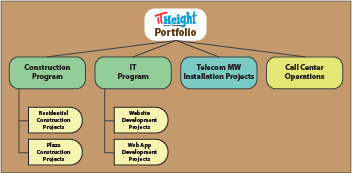
    The Bigger Picture: Projects, Programs, and Portfolios

    Projects don’t exist in isolation. They are part of a larger strategic structure.

    Let’s zoom out.

    1. Project

    Build one house.

    Success = Delivered on time, within budget, as promised.

    2. Program

    Build an entire housing community (multiple related house projects).

    Success = Collective benefits from managing them together.

    Imagine a real estate company plans to develop a residential society. That single goal includes many connected projects, such as:

    • Constructing 50 individual houses
    • Developing roads and internal streets
    • Installing water supply and drainage systems
    • Setting up electricity infrastructure
    • Creating parks and green areas
    • Building a community center or small school

    Each of these is a separate project with its own:

    • Timeline
    • Budget
    • Team
    • Deliverables

    But when managed together under one strategic objective, building a complete housing community, they form a program.

    3. Portfolio

    Manage all company investments like housing, office buildings, land acquisition.

    Success = Achieving the organization’s strategic vision.

    The focus becomes broader as you move from project → program → portfolio.

    What is Project Management

    The Modern Project Landscape: A World in Motion

    Today’s projects operate in a rapidly changing environment.

    We face:

    • Climate change
    • Political instability
    • Supply chain disruptions
    • Digital transformation
    • Artificial Intelligence
    • Agile ways of working

    The ground is constantly shifting.

    And because of that, the role of the project manager is evolving.

    It’s no longer enough to track schedules, monitor budgets, and prepare reports. A modern project manager must be a strategist leader, navigating changes, a skilled communicator and a true problem solver.

    Project management today is about adaptability and vision.

    Why Project Management Is the Engine of Progress

    Every innovation, every transformation, every major milestone in history was delivered through projects. Project management is not just about checklists and deadlines. It’s about turning ideas into results and transforming vision into reality. Project Managers build structured pathways to success by creating measurable value.

    Mastering Project Management with PMP

    If you truly want to excel in this powerful field, earning the globally recognized PMP certification is a game changer. The PMP credential from the Project Management Institute validates your expertise in leading projects across industries and environments.

    It proves that you don’t just manage tasks, you manage transformation.

    For the best PMP certification training and expert guidance, join us!

    Final Thoughts: What Future Will You Build?

    Project management is not limited to construction sites or corporate boardrooms. It’s present in launching startups, planning events, developing technology, driving social change and building careers. It is the disciplined way we move from today to a better tomorrow. The question isn’t whether projects will shape the future. They already are! The real question is will you be the one leading them?