



When people search for information online, they type specific words or phrases into search engines. These words are called keywords, and they play a very important role in Search Engine Optimization. If you want your website or blog to appear in search results, you need to understand what people are searching for and create content based on those terms.
This is where keyword research becomes essential. Keyword research helps you discover the exact words and phrases people use when looking for information, products, or services online. By targeting the right keywords, you can attract the right audience to your website and improve your chances of ranking higher in search results.
In this guide, you will learn what keyword research is, why it is important, and how beginners can find the right keywords for their content.
What Is Keyword Research in SEO?
Keyword research in SEO is the process of identifying the search terms that people enter into search engines. These keywords help search engines understand what your content is about and match it with relevant user searches.
For example, if someone wants to learn about SEO, they might search for phrases like “SEO for beginners” or “how SEO works”. If your article includes these keywords naturally, search engines are more likely to show your page in the results.
Keyword research helps website owners understand their audience, create relevant content, and improve their website visibility.
Before performing keyword research, it is important to understand the basics of SEO. You can read our detailed guide on What Is SEO? A Complete Beginner’s Guide in 2026 to learn how search engines work.
Why Keyword Research Is Important?
Keyword research is one of the most critical processes in SEO, as it ensures your content is reaching your intended audience.
Firstly, it gives you insights into what people are looking for. Rather than relying on assumptions, you create content based on actual search volume.
Secondly, it boosts your chances of appearing higher up in search engine results. When you use relevant keywords in your content, search engines can easily identify your content’s topic.
Thirdly, it brings you targeted traffic. Visitors who have searched for certain keywords are likely to be looking for answers or solutions, increasing their chances of engaging with your content.

Types of Keywords in SEO
Understanding different types of keywords can help you choose the best ones for your content.
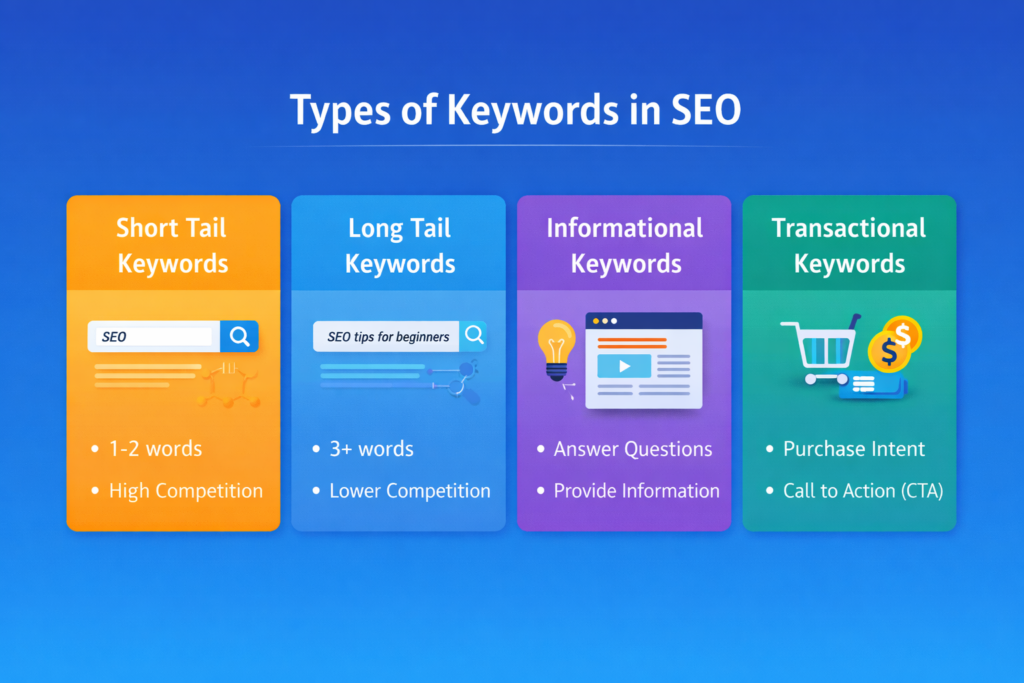
Short Tail Keywords
These are broad search terms usually made of one or two words. For example, “SEO” or “keyword research”. They have high search volume but also high competition.
Long Tail Keywords
Long tail keywords are more specific phrases such as “SEO tips for beginners”. These keywords usually have lower competition and are easier to rank for.
Informational Keywords
These keywords are used when people are looking for information. For example, “what is keyword research in SEO”.
Transactional Keywords
These keywords indicate that the user is ready to buy or take action, such as “SEO tools for keyword research”.
How to Do Keyword Research?
Finding the right keywords does not have to be complicated. Beginners can follow a few simple steps to discover useful keywords.
Understand Your Topic
Start by thinking about the main topic of your content. For example, if your blog is about SEO, possible topics could include keyword research, on page SEO, or link building.
Once you have a topic, think about what people might search for related to that topic.
Use Keyword Research Tools
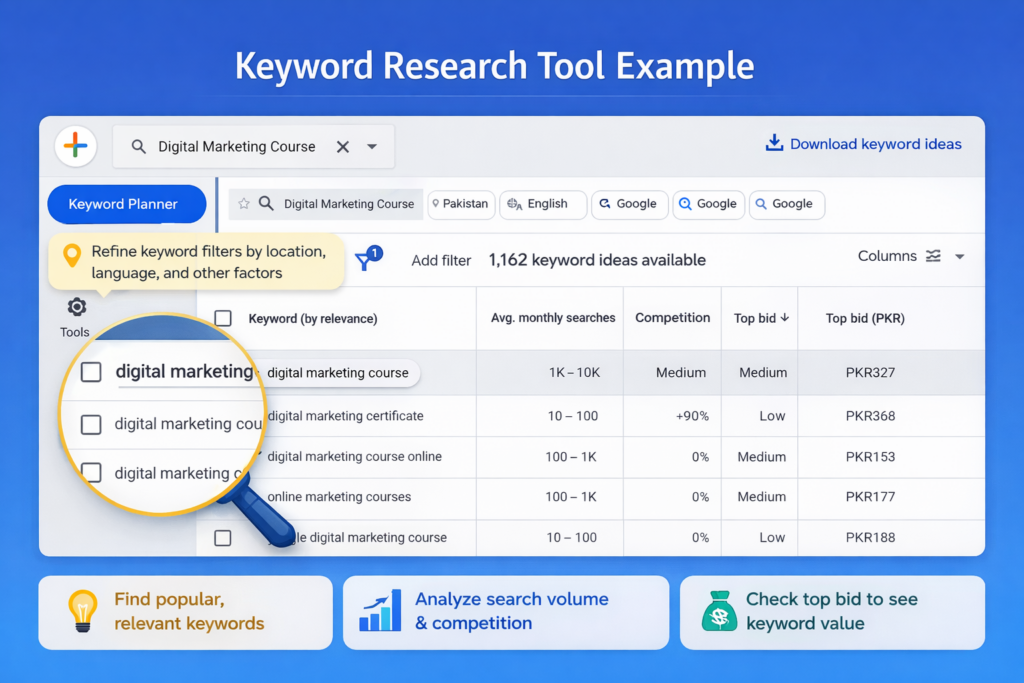
Keyword research tools help you discover popular search terms and analyze their search volume and competition.
Some commonly used tools include Google Keyword Planner, Ubersuggest, and Ahrefs. These tools provide valuable insights such as keyword difficulty, search trends, and related keyword ideas.
Analyze Search Intent
Search intent refers to the reason behind a user’s search query. Understanding search intent helps you create content that directly answers the user’s question.
For example, someone searching for “how to do keyword research” wants a step by step guide rather than a product page.
Focus on Low Competition Keywords
For new websites, it is better to target keywords with lower competition. These keywords may have smaller search volumes, but they are easier to rank for and can still bring valuable traffic.
Long tail keywords are often the best choice for beginners.
How to Find Keywords for SEO?
There are several simple methods you can use to discover new keywords.
Google Search Suggestions
When you start typing in the search bar, Google automatically suggests related search queries. These suggestions are based on real user searches and can provide useful keyword ideas.
People Also Ask Section
Search results often include a section with related questions. These questions can help you find additional keywords and content ideas.
Competitor Analysis
You can also analyze the keywords used by competing websites. This can help you discover topics that are already attracting traffic in your niche.
After finding the right keywords, the next step is learning how to optimize your pages using those keywords. This is where on page SEO becomes important, as it helps you place keywords effectively within your content to improve rankings and user experience.
Common Keyword Research Mistakes
Some common mistakes that beginners make while doing keyword research.
First, new people often make the mistake of targeting keywords with very high competition. These keywords may not be easy for new websites to rank for.
Another mistake is focusing only on search volume. While high volume keywords can bring traffic, they may not always match the user’s intent.
Third, it is a common mistake to stuff keywords in the content. This is because it may not be easy to read the content.
Conclusion
Keyword research is the first step towards a successful SEO strategy. By knowing what people are looking for and generating the required information based on that search term, you are able to reach the target audience and increase your website’s visibility in the search engine results.
For beginners, the key is to start with simple tools, focus on relevant topics, and target keywords that match user intent. With consistent practice and proper optimization, keyword research can help you build a strong content strategy and grow your website traffic over time.
If you want to learn SEO in a practical and professional way, you can explore our SEO Training to gain hands on experience and start your journey in digital marketing.
FAQ Schema Questions
What is keyword research in SEO?
Keyword research in SEO is the process of finding the words and phrases people search for in search engines. It helps website owners create content that matches user search queries and improves their chances of ranking higher in search results.
Why is keyword research important for SEO?
Keyword research is important because it helps identify the search terms your audience is using. By targeting the right keywords, websites can attract relevant traffic and improve their visibility in search engines.
How do beginners learn keyword research in SEO?
Beginners can learn keyword research by understanding basic SEO concepts, using simple tools like Google Keyword Planner, and practicing with real examples. It is important to focus on search intent and choose keywords that match what users are looking for. For a more structured and practical learning experience, you can join a professional SEO Training in Pakistan where you can work on real projects and learn step by step from experts.
What tools are used for keyword research?
Common keyword research tools include Google Keyword Planner, Ubersuggest, and Ahrefs. These tools help find keyword ideas, search volume, and keyword difficulty.
What is the difference between short tail and long tail keywords?
Short tail keywords are broad search terms with high search volume and competition. Long tail keywords are more specific phrases that usually have lower competition and are easier to rank for.