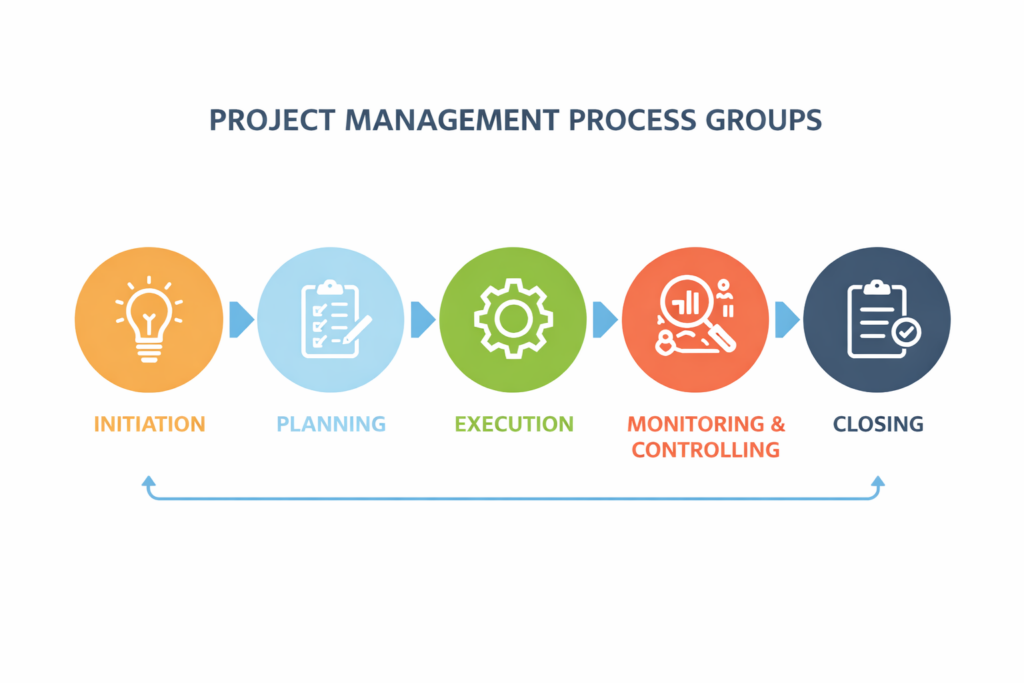


Project management has become one of the most vital skills in today’s world job market. No matter which industry you belong to, whether it is IT, construction, finance, healthcare, or any other, your company will always be looking for someone who can handle projects effectively.
The demand for PMP-certified professionals is rising globally in 2026. One of the most trusted certifications in this field is the PMP certification, offered by the Project Management Institute (PMI) Project Management Institute.
In this blog post, we will discuss the PMP certification requirements for 2026 in simple terms so that anyone can understand easily, even if they are new to project management.
What Is PMP Certification?
PMP is an abbreviation for Project Management Professional. It is an internationally accepted certification that demonstrates your competency in managing projects effectively.
This certification is not just theory-based, it emphasizes practical aspects of project management such as planning, implementation, leadership, budgeting, and risk management.
In other words, PMP certification means that you are capable of handling a project professionally from its inception until completion.
This certification is valid in almost all countries of the world, meaning that it is universally applicable for career purposes.
Why PMP Certification Is Important?
The competition in the job market is extremely high in the year 2026. Companies are not only looking for degrees,but they also want certified skills.
PMP certification is important because it helps professionals grow faster in their career development.
Here is why it matters globally:
1. Better Job Opportunities
Many companies prefer PMP certified professionals for project management roles. It helps you stand out from other candidates.
2. Higher Salary Potential
Professional certification often results in higher pay for certified individuals due to their demonstrated skills.
3. International Recognition
The PMP certificate is recognized internationally, meaning you can seek employment in various countries.
4. Strong Professional Credibility
It shows that you follow international project management standards and practices.
5. Leadership Growth
PMP helps you move into senior roles like project manager, program manager, or team lead.
Many organizations value professional certifications since they adhere to international practices.
PMP Certification Requirements 2026
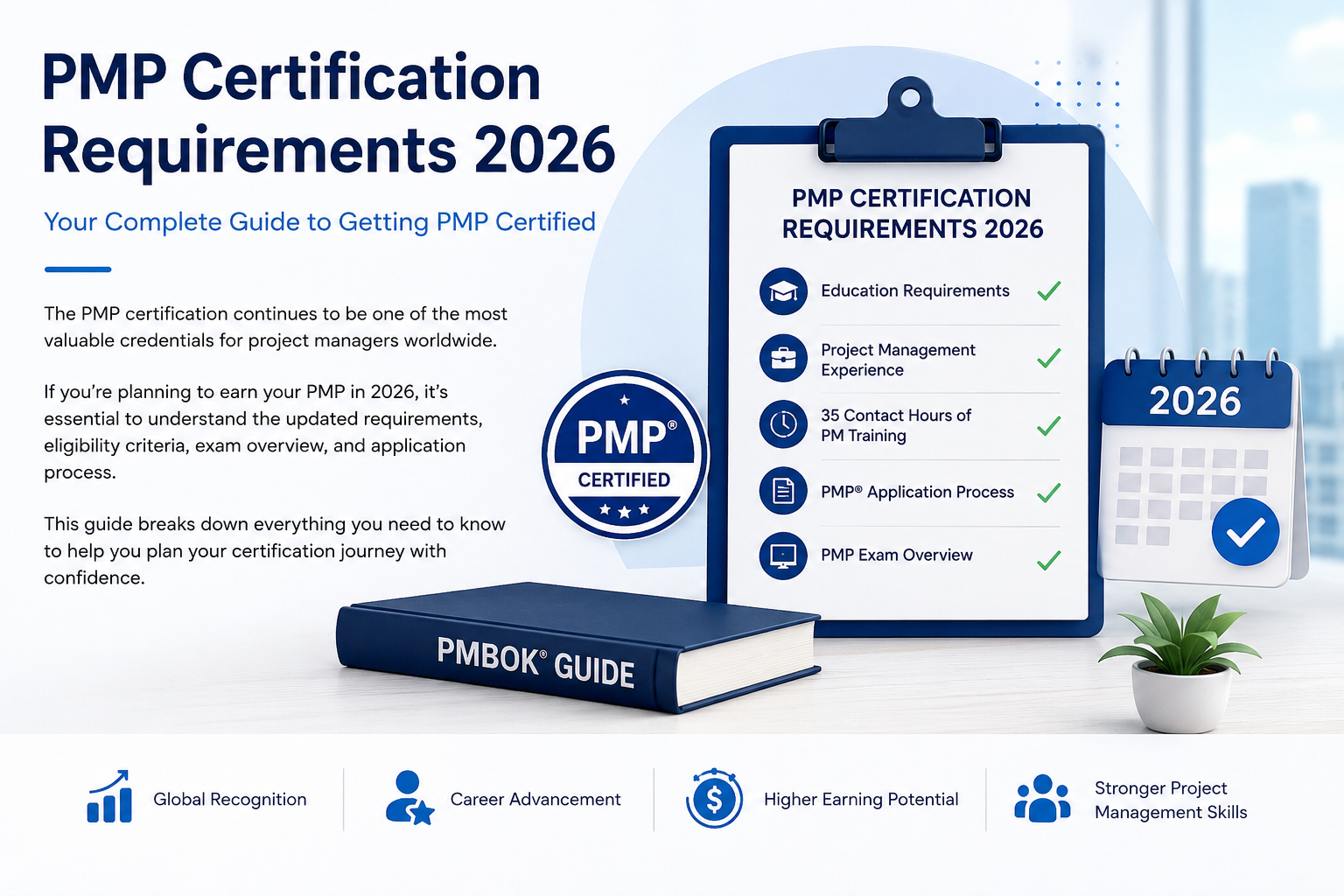
To apply for PMP certification, you must meet three main requirements:
- Educational background
- Project management experience
- 35 hours of training
If you want to understand this in more detail, you can also read our
PMP Eligibility Criteria Guide.
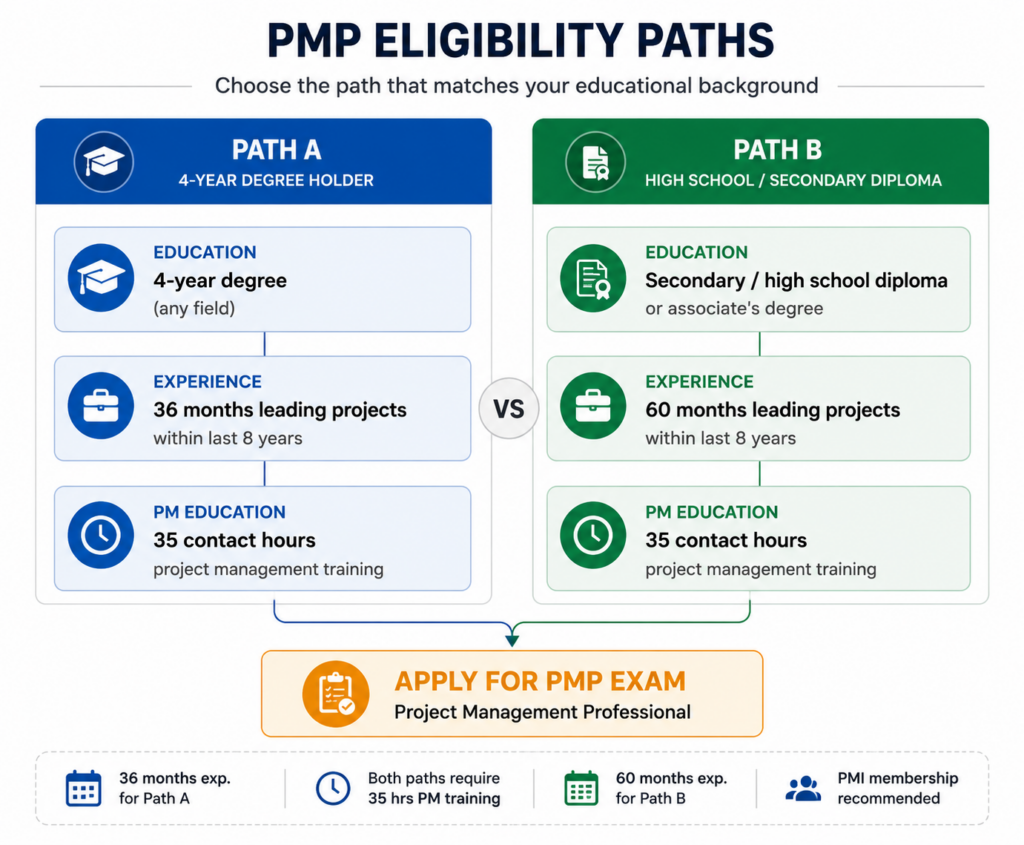
Path 1: For Bachelor’s Degree Holders
If you have a four-year bachelor’s degree, your requirements are:
- 36 months (3 years) of project management experience
- 35 hours of project management training
If you are a graduate and have worked in projects (even as a team member or assistant), you may already qualify.
You don’t need to be a project manager by title. Any real project-related work can count if it involves planning, execution, or coordination.
Path 2: For Intermediate or Diploma Holders
If you do not have a bachelor’s degree, you can still apply.
You need:
- 60 months (5 years) of project management experience
- 35 hours of project management training
This path is for professionals who have more work experience but lower academic qualifications. PMI accepts experience more than education in this case.
So even if you started working early in your career, you can still become PMP certified.
PMP Training Requirement
Before applying, you must complete 35 hours of formal project management training.
This training is very important because it prepares you for the PMP exam.
What you will learn in training?
- Project planning and scheduling
- Risk management
- Cost and budget control
- Communication skills
- Agile and traditional project methods
- Team leadership skills
This training teaches you how real projects are managed in companies. It helps you understand both theory and practical exam questions. Many institutes worldwide offer this training, both online and offline. But many professionals choose trusted institutes like ITHeight to complete their 35-hour PMP training because it provides structured learning and helps students understand exam concepts in a simple, practical way.
To prepare for the exam, it is also important to understand the topics. You can check our PMP Certification Syllabus blog.
What You Should Know Before Exam Preparation
Before starting your application or exam preparation, make sure:
- Your project experience is properly documented
- You complete your 35 training hours certificate
- You understand PMP exam format
- You follow a proper study plan
Preparation is not only about studying, it is also about organizing your experience and documents correctly.
2026 Exam Update: What’s Changing After Jul 9, 2026
The eligibility criteria mentioned above will remain the same until July 2026. But what will change in July 2026 is the examination syllabus. One of the biggest changes that Project Management Institute (PMI) is making to the exam syllabus in recent times is happening now, and you must get ready for it. If you plan to appear in the exam after 9 July 2026, you need to prepare for the updated version.
What is new:
- There are still three domains: People, Process, and Business Environment, but their weighting is very different now.
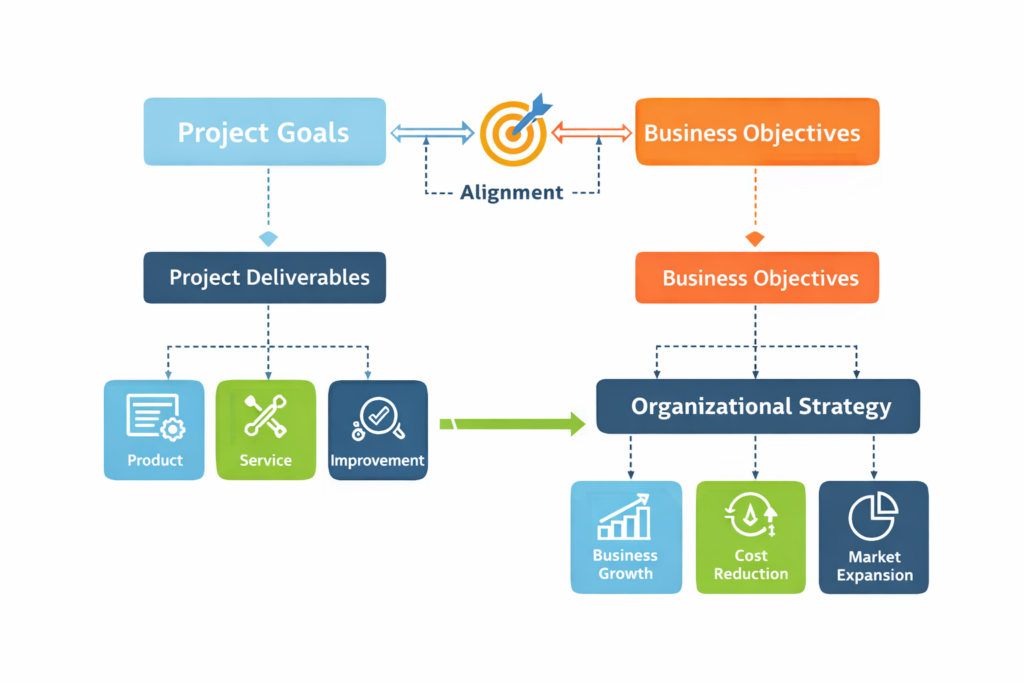
- Business Environment expands from 8% to approximately 26% because of the initiative by PMI that encourages project managers to consider their projects in relation to organisational strategy.
- Artificial Intelligence in Project Management, Sustainability, Stakeholders, and Value Delivery are among the new topics.
- Alignment with the PMBOK® Guide 8th Edition released at the end of 2025
| Domain | Current | From July 2026 |
| People | 42% | ~33% |
| Process | 50% | ~41% |
| Business Environment | 8% | ~26% |
ITHeight’s course curriculum is already updated to reflect the July 2026 exam outline, so students enrolling now are preparing for the right exam.
How PMP Certification Process Works (Step-by-Step)
Once you confirm eligibility, the application process follows these steps:
Step 1: Create your PMI account
Go to pmi.org and register. Your account is your hub for applications, exam scheduling, and PDU tracking.
Step 2: Gather your documentation
Before starting the application, have ready: your educational certificate, a list of projects with dates and hours, your supervisor or client references, and your 35-hour training certificate.
Step 3: Complete the online application
Fill in your experience summaries using PMI’s project detail format. Be precise and consistent. Vague descriptions increase the risk of an audit.
Step 4: Wait for PMI approval
PMI usually takes five working days to process the application, except when your application is selected for an audit. If it is audited, you have to present hard copies of the document and the process may take longer.
Step 5: Pay the exam fee and schedule
After approval, you are issued a number which can be used on the Pearson VUE website. The approximate cost of taking the test in 2026 is 405 dollars for PMI members and 555 dollars for non-members. The yearly membership to PMI costs about 139 dollars, providing examination discounts and a free copy of PMBOK® Guide in digital form making it a worthwhile investment for most candidates.
Step 6: Sit the exam
The PMP examination involves answering 180 questions within 230 minutes. The questions cover predictive, agile, and hybrid situations. Results appear immediately on screen.
Important Tips Before Applying
Before applying, make sure:
- Keep your experience details clear and accurate
- Complete your training from a recognized provider
- Study PMP exam content carefully
- Practice mock tests regularly
- Stay consistent in preparation
Success in PMP is not only about eligibility, it is also about proper preparation and discipline.
Conclusion
PMP certification is among the most effective certifications for career advancement in project management. The certification is internationally recognized and will enable professionals to forge a strong career path in all kinds of industries.
By 2026, the criteria for achieving this certification are straightforward but significant: education, experience, and training. Once you have these and prepare yourself effectively, you will be able to secure your project management certification.
If you want to build a strong career in project management, PMP certification is a powerful step. You can visit our PMP certification guide to learn complete eligibility, training, and experience requirements in detail.
Frequently Asked Questions (FAQs):
What are PMP certification requirements in 2026?
You need a combination of education, project management experience, and 35 hours of training. PMI checks your ability to manage real projects, not just academic knowledge.
Can I apply without a bachelor’s degree?
Yes, you can still apply. You will need more project management experience (about 60 months). This makes PMP flexible for experienced professionals worldwide.
How many training hours are required?
You must complete 35 hours of formal project management training. This training prepares you for both exam questions and real project situations.
Is PMP certification worth it globally?
Yes, it is highly valuable worldwide. PMP certification improves job opportunities, increases salary potential, and builds strong professional credibility in all industries like IT, construction, finance, and healthcare.
Is PMP certification difficult?
PMP certification requires preparation and understanding of project management concepts, but proper study and training can help you pass successfully.
Which institute is good for PMP certification preparation?
A wise choice to prepare for PMP certification would be the ITHeight Institute as it offers professional training, practice and exam tips.