Tag: Search Engine Optimization

  • Keyword Research in SEO: How to Find the Right Keywords

    Keyword Research in SEO: How to Find the Right Keywords

    When people search for information online, they type specific words or phrases into search engines. These words are called keywords, and they play a very important role in Search Engine Optimization. If you want your website or blog to appear in search results, you need to understand what people are searching for and create content based on those terms.

    This is where keyword research becomes essential. Keyword research helps you discover the exact words and phrases people use when looking for information, products, or services online. By targeting the right keywords, you can attract the right audience to your website and improve your chances of ranking higher in search results.

    In this guide, you will learn what keyword research is, why it is important, and how beginners can find the right keywords for their content.

    What Is Keyword Research in SEO?

    Keyword research in SEO is the process of identifying the search terms that people enter into search engines. These keywords help search engines understand what your content is about and match it with relevant user searches.

    For example, if someone wants to learn about SEO, they might search for phrases like “SEO for beginners” or “how SEO works”. If your article includes these keywords naturally, search engines are more likely to show your page in the results.

    Keyword research helps website owners understand their audience, create relevant content, and improve their website visibility.

    Before performing keyword research, it is important to understand the basics of SEO. You can read our detailed guide on What Is SEO? A Complete Beginner’s Guide in 2026 to learn how search engines work.

    Why Keyword Research Is Important?

    Keyword research is one of the most critical processes in SEO, as it ensures your content is reaching your intended audience.

    Firstly, it gives you insights into what people are looking for. Rather than relying on assumptions, you create content based on actual search volume.

    Secondly, it boosts your chances of appearing higher up in search engine results. When you use relevant keywords in your content, search engines can easily identify your content’s topic.

    Thirdly, it brings you targeted traffic. Visitors who have searched for certain keywords are likely to be looking for answers or solutions, increasing their chances of engaging with your content.
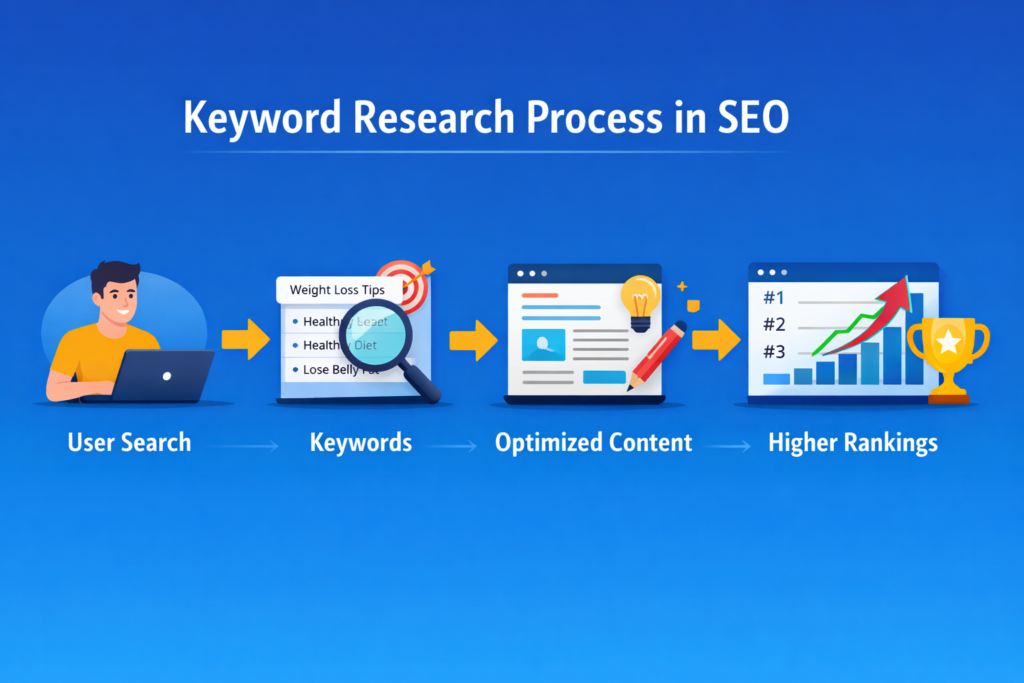
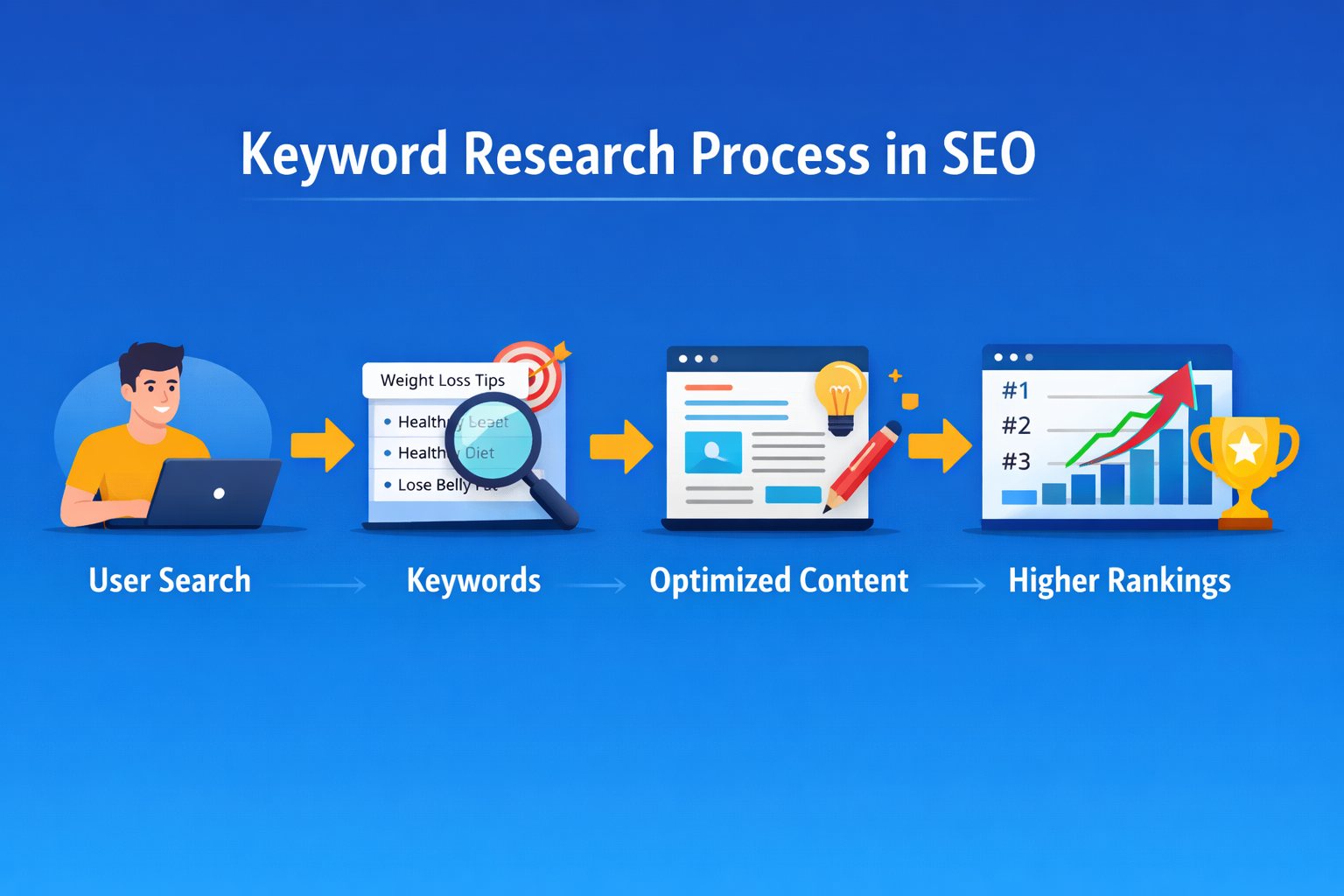
    keyword research process in seo

    Types of Keywords in SEO

    Understanding different types of keywords can help you choose the best ones for your content.

    Short Tail Keywords

    These are broad search terms usually made of one or two words. For example, “SEO” or “keyword research”. They have high search volume but also high competition.

    Long Tail Keywords

    Long tail keywords are more specific phrases such as “SEO tips for beginners”. These keywords usually have lower competition and are easier to rank for.

    Informational Keywords

    These keywords are used when people are looking for information. For example, “what is keyword research in SEO”.

    Transactional Keywords

    These keywords indicate that the user is ready to buy or take action, such as “SEO tools for keyword research”.
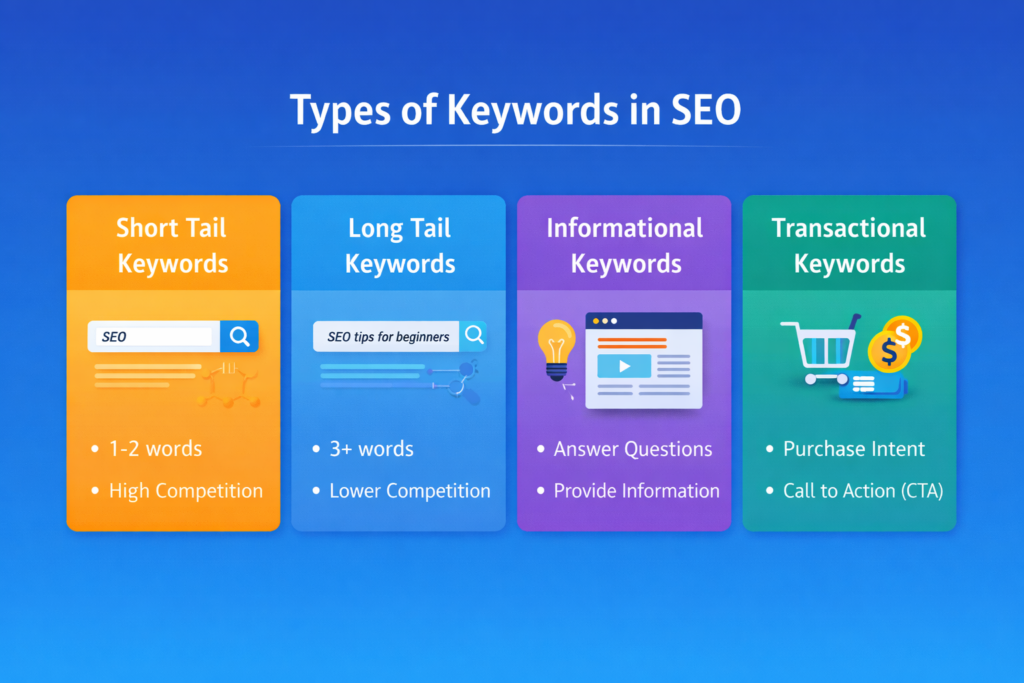
    types of keyword in seo

    How to Do Keyword Research?

    Finding the right keywords does not have to be complicated. Beginners can follow a few simple steps to discover useful keywords.

    Understand Your Topic

    Start by thinking about the main topic of your content. For example, if your blog is about SEO, possible topics could include keyword research, on page SEO, or link building.

    Once you have a topic, think about what people might search for related to that topic.

    Use Keyword Research Tools

    Keyword research tools help you discover popular search terms and analyze their search volume and competition.

    Some commonly used tools include Google Keyword Planner, Ubersuggest, and Ahrefs. These tools provide valuable insights such as keyword difficulty, search trends, and related keyword ideas.
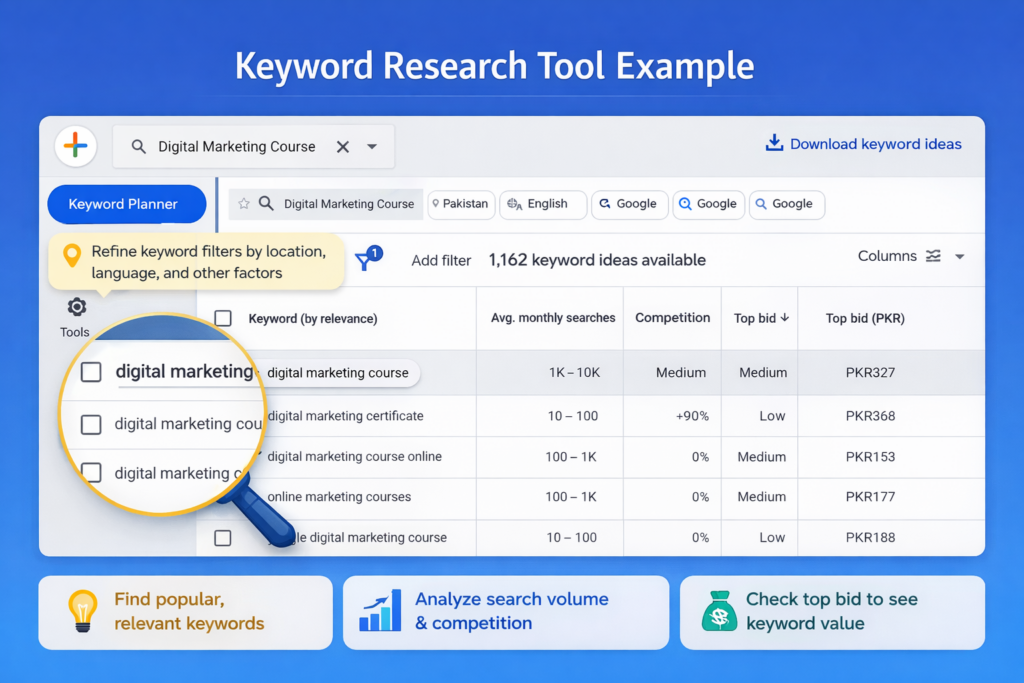
    keyword research tool example

    Analyze Search Intent

    Search intent refers to the reason behind a user’s search query. Understanding search intent helps you create content that directly answers the user’s question.

    For example, someone searching for “how to do keyword research” wants a step by step guide rather than a product page.

    Focus on Low Competition Keywords

    For new websites, it is better to target keywords with lower competition. These keywords may have smaller search volumes, but they are easier to rank for and can still bring valuable traffic.

    Long tail keywords are often the best choice for beginners.

    How to Find Keywords for SEO?

    There are several simple methods you can use to discover new keywords.

    Google Search Suggestions

    When you start typing in the search bar, Google automatically suggests related search queries. These suggestions are based on real user searches and can provide useful keyword ideas.

    People Also Ask Section

    Search results often include a section with related questions. These questions can help you find additional keywords and content ideas.

    Competitor Analysis

    You can also analyze the keywords used by competing websites. This can help you discover topics that are already attracting traffic in your niche.

    After finding the right keywords, the next step is learning how to optimize your pages using those keywords. This is where on page SEO becomes important, as it helps you place keywords effectively within your content to improve rankings and user experience.

    Common Keyword Research Mistakes

    Some common mistakes that beginners make while doing keyword research.

    First, new people often make the mistake of targeting keywords with very high competition. These keywords may not be easy for new websites to rank for.

    Another mistake is focusing only on search volume. While high volume keywords can bring traffic, they may not always match the user’s intent.

    Third, it is a common mistake to stuff keywords in the content. This is because it may not be easy to read the content.

    Conclusion

    Keyword research is the first step towards a successful SEO strategy. By knowing what people are looking for and generating the required information based on that search term, you are able to reach the target audience and increase your website’s visibility in the search engine results.

    For beginners, the key is to start with simple tools, focus on relevant topics, and target keywords that match user intent. With consistent practice and proper optimization, keyword research can help you build a strong content strategy and grow your website traffic over time.

    If you want to learn SEO in a practical and professional way, you can explore our SEO Training to gain hands on experience and start your journey in digital marketing.

    FAQ Schema Questions

    What is keyword research in SEO?

    Keyword research in SEO is the process of finding the words and phrases people search for in search engines. It helps website owners create content that matches user search queries and improves their chances of ranking higher in search results.

    Why is keyword research important for SEO?

    Keyword research is important because it helps identify the search terms your audience is using. By targeting the right keywords, websites can attract relevant traffic and improve their visibility in search engines.

    How do beginners learn keyword research in SEO?

    Beginners can learn keyword research by understanding basic SEO concepts, using simple tools like Google Keyword Planner, and practicing with real examples. It is important to focus on search intent and choose keywords that match what users are looking for. For a more structured and practical learning experience, you can join a professional SEO Training in Pakistan where you can work on real projects and learn step by step from experts.

    What tools are used for keyword research?

    Common keyword research tools include Google Keyword Planner, Ubersuggest, and Ahrefs. These tools help find keyword ideas, search volume, and keyword difficulty.

    What is the difference between short tail and long tail keywords?

    Short tail keywords are broad search terms with high search volume and competition. Long tail keywords are more specific phrases that usually have lower competition and are easier to rank for.
  • The Complete SEO Process Explained: Step-by-Step for Beginners

    The Complete SEO Process Explained: Step-by-Step for Beginners

    Search Engine Optimization (SEO) is a process used to increase the visibility of a website on search engines. When users search for information or anything on the internet, a list of search engine result pages is shown to users. The main aim of doing SEO is to rank a website on the first page of search engine result pages.

    Most beginners think that SEO is only one task to be completed, but in reality, SEO is a complete process that involves multiple steps to be completed. These steps help search engines understand the content of a website and increase its popularity on the internet.

    In this blog, we will explain the complete SEO process step by step so beginners can clearly understand how SEO works.

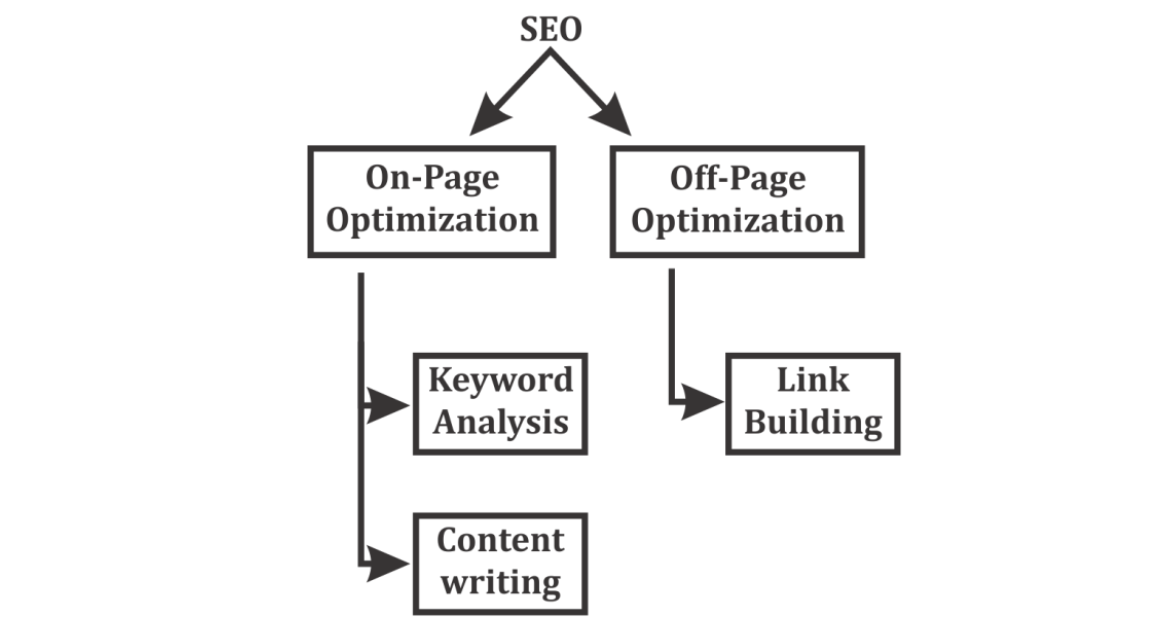
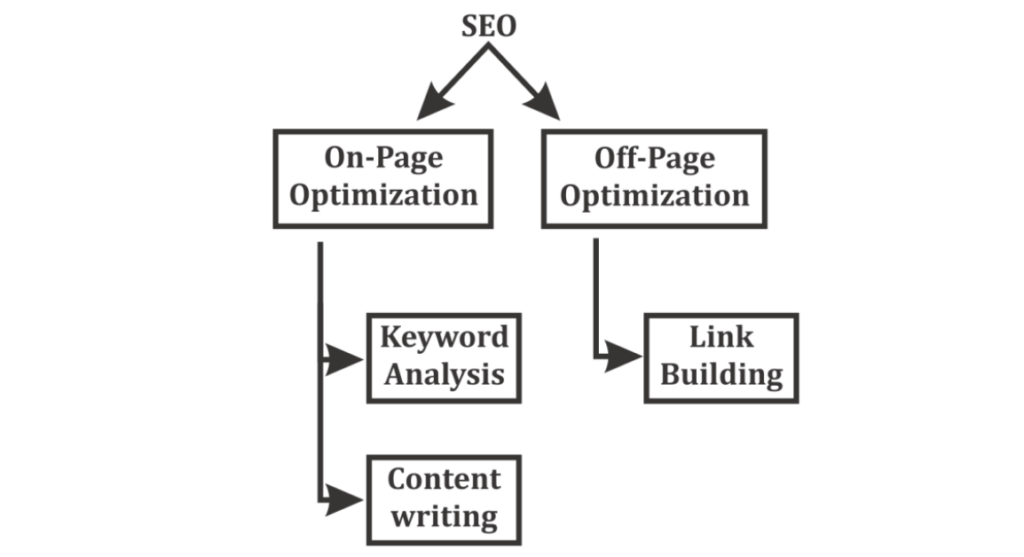
    Bird’s Eye View of SEO Processes

    There are two main processes of Search Engine Optimization:

    • On-Page Optimization
    • Off-Page Optimization

    Both of these processes work together to improve a website’s ranking in search engine results.

    process of search engine optimization

    On-Page Optimization

    On-Page Optimization is the process in which the text and content of a webpage are modified according to the standards of search engines.

    The purpose of on-page SEO is to make it easier for search engines to understand the topic of the webpage. When search engines clearly understand the content, they can show the page to users searching for related information.

    On-page optimization is further divided into two main processes:

    • Keyword Analysis
    • Content Writing

    Keyword Analysis

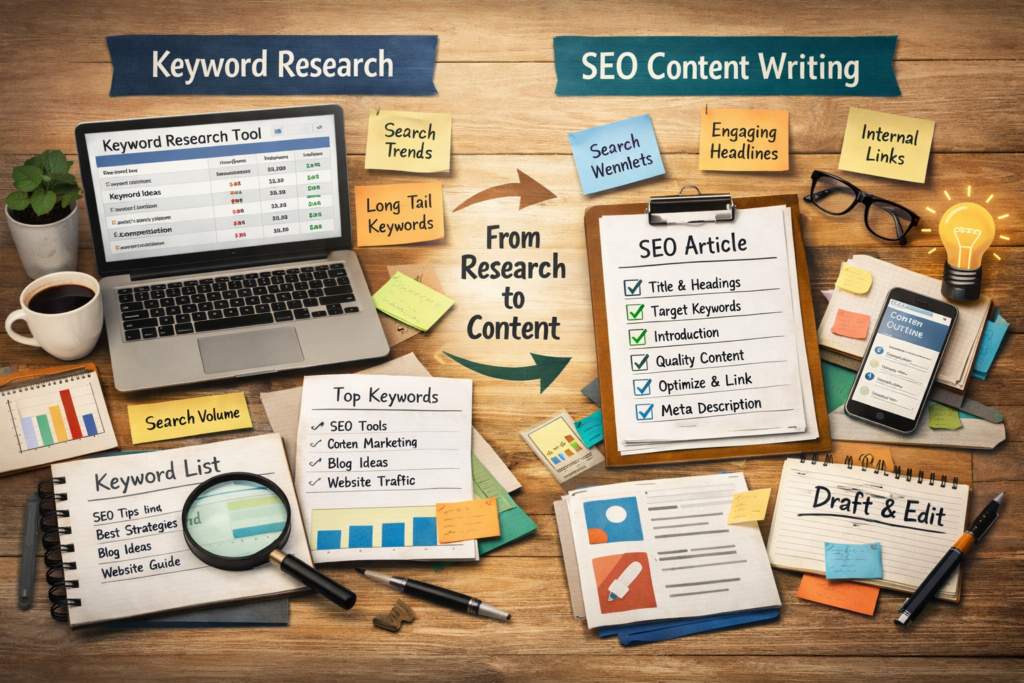
    Keyword Analysis is the beginning of any search marketing campaign.

    Keyword Analysis is a process used to identify keywords used by customers to search on various search engines. Keywords are words or phrases used by people to search for information or services on the internet.

    If businesses are able to identify keywords, then they can produce content on their website that matches those keywords. This will help them attract visitors to their website.

    The main goal of SEO is not only to bring visitors to a website but also to turn them into customers. This process is called conversion in SEO.

    Content Writing

    Content writing is the process of writing optimized text for a webpage.

    The content is considered optimized when it follows the guidelines of search engines and includes relevant keywords naturally. Good content should provide useful information to visitors and clearly explain the topic of the webpage.

    When the content is well written and optimized, search engines can easily understand the page and show it in search results.

    keyword research and seo content writing process

    Off-Page Optimization

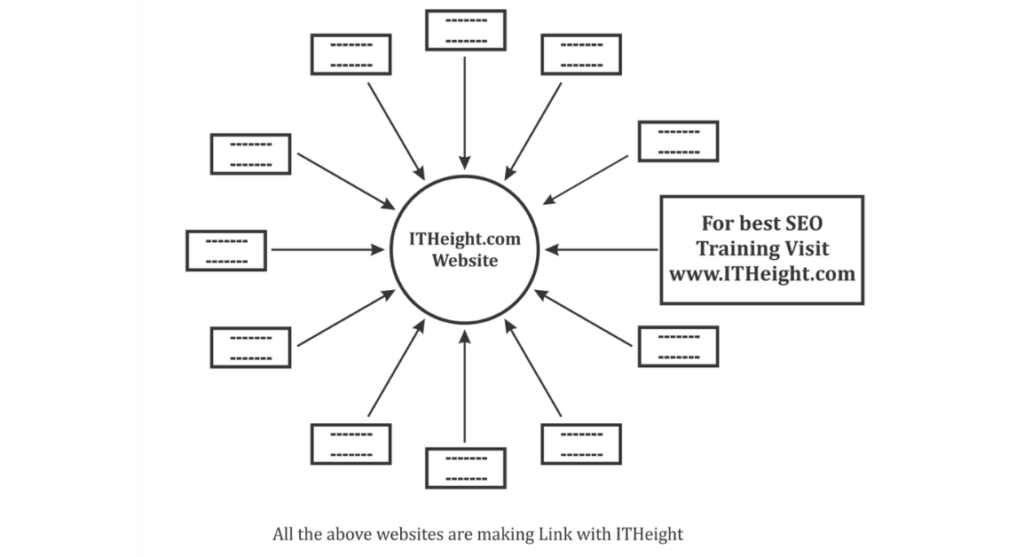
    Off-Page Optimization is defined as “making a website popular among other websites on the internet.”

    A website is considered popular if its links appear on other websites. These links signal to search engines that a particular website is valuable and trusted.

    Ideally, these links should come naturally from happy clients or users who recommend the website. However, instead of waiting for people to mention the website, businesses often promote their links on different platforms.

    These platforms may include:

    • Link building
    • Guest Posting
    • Social bookmarking websites
    • Forums
    • Blogs

    This process helps increase the website’s visibility and reputation across the internet.

    Link Building

    Link Building is the main activity performed in Off-Page Optimization.

    The process of placing a website link on other websites is known as Link Building. These links are commonly called backlinks.

    Backlinks help search engines understand that a website is trustworthy and relevant. When a website receives links from multiple sources, its chances of ranking higher in search engine results increase.

    However, quality links are more important than quantity. Links from trusted and relevant websites provide better SEO value.

    In our next blogs, we will discuss On-Page SEO and Off-Page SEO separately in more detail so beginners can understand each process step by step.

    link building backlinks seo concept

    Why the SEO Process Is Important

    The SEO process helps websites become visible to people searching online.

    When SEO is done correctly, it can:

    • Increase website traffic
    • Improve search engine rankings
    • Build online credibility
    • Help businesses reach potential customers

    Without SEO, even a well-designed website may remain hidden in search results.

    Conclusion

    The process of Search Engine Optimization is a systematic approach to enhance the website’s presence on search engines. The entire process of SEO consists of two main steps: On Page Optimization and Off Page Optimization.

    On Page Optimization is all about enhancing the webpage itself through keyword research and optimized content writing. Off Page Optimization is all about increasing the popularity of the website through link building and external promotions.

    Both the processes are crucial for improving the search engine rankings and increasing the number of visitors to the website.

    Frequently Asked Questions (FAQ)

    Question: What is the SEO process?

    Answer: The SEO process is a series of steps used to improve a website’s visibility in search engines. It mainly includes keyword research, content optimization, and link building to help websites appear in search results. At ITHeight Institute, we provide SEO Course in Lahore that covers the entire SEO process step by step.

    Question: What are the main types of SEO?

    Answer: The two main types of SEO are On-Page SEO and Off-Page SEO. On-page SEO focuses on optimizing website content and structure, while off-page SEO focuses on building links and increasing website authority.

    Question: Why is SEO important for websites?

    Answer: SEO helps websites appear in search results when users search for related information. This increases website traffic, improves online visibility, and helps businesses reach potential customers.

    Question: What is keyword analysis in SEO?

    Answer: Keyword analysis is the process of finding the words and phrases that people use when searching on search engines such as Google. These keywords help businesses create content that matches user searches.

    Question: What is link building in SEO?

    Answer: Link building is the process of placing a website link on other websites. These links help search engines understand that the website is trustworthy and relevant, which can improve search rankings. Our SEO Training in Lahore at ITHeight Institute teaches practical link building techniques for better results.

  • What is Conversion in SEO?

    What is Conversion in SEO?

    Search Engine Optimization (SEO) helps websites get visitors from search engines. However, getting traffic alone is not the final goal. The end goal of SEO is conversion, which happens when a visitor on the website performs some valuable action, such as buying a product, filling out a form, or contacting a business. Knowing the concept of conversion helps businesses convert website visitors into real customers and increase their sales. In this blog, we will explain the concept of conversion in SEO and how visitors become customers.

    SEO as a Marketing Strategy

    SEO is one of the ways of digital marketing, and the ultimate objective of a marketer is to increase the sales of the company. Businesses invest in SEO services because they want to generate more sales through search engines.

    Remember that the main objective of getting SEO services from any company is to increase sales through search engine traffic. As a Search Engine Optimizer, it is important to keep your focus on the concept of conversion.

    What is Conversion in SEO?

    A conversion is when a website visitor completes a desired action on a website. This action can be different depending on the business goals.

    Examples of conversions include:

    • Purchasing a product
    • Filling out a contact form
    • Signing up for a newsletter
    • Downloading a guide
    • Booking a service

    In simple words, conversion means turning visitors into customers or leads.

    Conversion marketing is used to describe the act of converting website visitors into paying customers.

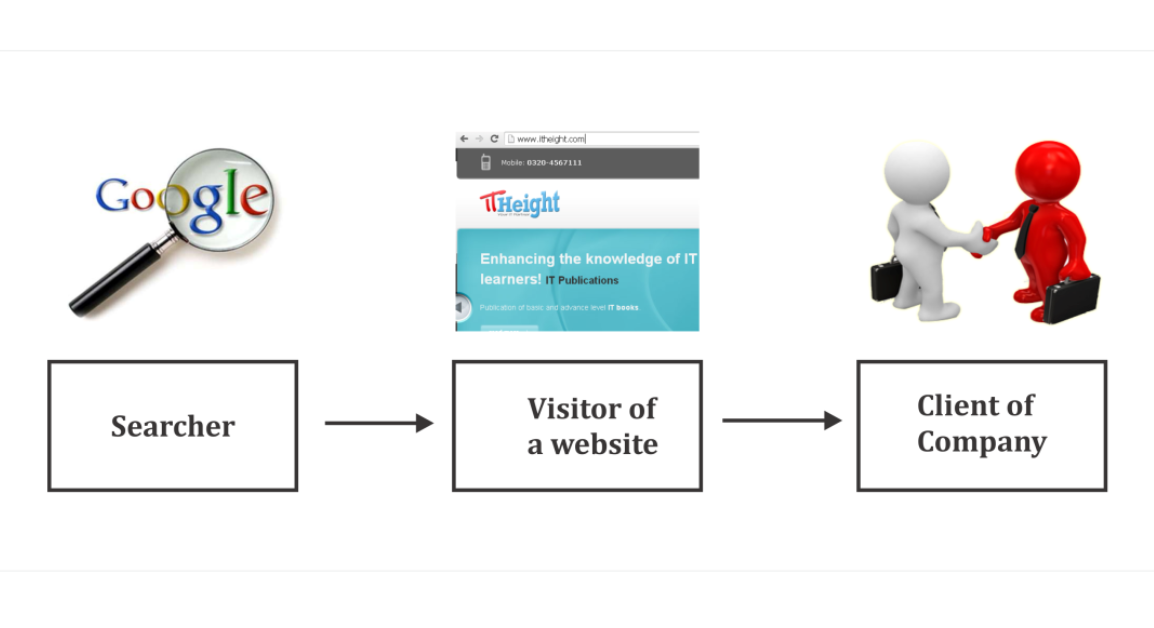
    The Conversion Flow: Searcher → Visitor → Client

    The process of conversion usually follows a simple flow.

    1. Searcher

    When people search on a search engine, they are called Searchers. They enter a keyword related to their needs or problems.

    For example, a person might search for:

    • “best SEO course”
    • “digital marketing services”
    • “buy laptop online”

    Search engines then display results on the Search Engine Results Page (SERP) that match the keyword entered by the searcher. These results help users find relevant websites and information related to their search.

    2. Visitor

    When the searcher clicks one of the links shown in the search results and opens a website, they become a Visitor of that website.

    At this stage, the website content should:

    • Provide useful information
    • Solve the user’s problem
    • Build trust with the visitor

    Good SEO content encourages visitors to explore more pages on the website.

    3. Client

    If the visitor likes the products or services offered by the website and decides to pay for them, the visitor becomes a Client of that website.

    This is the final step of the conversion process.

    searcher visitor client conversion flow

    Why Conversion Matters in SEO

    Many people think SEO is only about ranking higher on Google. However, ranking is just the first step. The real purpose of SEO is to bring visitors who are more likely to become customers.

    Conversion helps businesses:

    • Increase sales
    • Generate leads
    • Grow their customer base
    • Improve business revenue

    Without conversions, website traffic does not create real business value.

    SEO’s Main Business Goal

    The main goal of SEO is not just to increase traffic, but to bring the right visitors who are more likely to convert into customers.

    Effective SEO focuses on:

    • Targeting the right keywords
    • Attracting the right audience
    • Creating helpful content
    • Encouraging visitors to take action

    When SEO is done correctly, it helps businesses grow their sales and customer base.

    Conclusion

    Conversion is the most critical part of the entire SEO process. It is the link between website traffic and actual business success. It is the process by which the Searcher is converted into a Visitor and then into a Client.

    Always keep the end goal in mind as an SEO professional is conversion into a Client from a Visitor. When SEO strategies are focused towards conversion, businesses can attain actual success.

    Understanding SEO and conversion strategies can help businesses turn website visitors into real customers. If you want to learn how search engines work, how to rank websites, and how to increase conversions, learning SEO is the right step.

    Visit our SEO Training page to explore step-by-step training and start building your skills in search engine optimization and digital marketing.

  • What Is SERP? How Search Engine Results Work in 2026

    What Is SERP? How Search Engine Results Work in 2026

    When you search for anything on Google, Bing, or Yahoo, you see a whole page of results. This page of results is called SERP. It is very important to know the meaning of SERP because it can help you know the importance of the first page of the search engine.

    In this blog, we will discuss the meaning of SERP, the importance of the first page, and the behavior of users when searching online.

    Meaning of SERP

    SERP is the abbreviation of Search Engine Results Page. It is the page that comes up when you enter a keyword in the search engine and hit enter. In simple words, a SERP is the list of results shown by a search engine in response to a user’s query.

    Every time you search for something on the search engine, you will be provided with multiple links to websites. This entire list of results provided by the search engine is called the SERP.

    The technique of search engine optimization is used for the website so that it can come on the first page of the search engine. Instead of saying pages of search engine results, we say SERP.

    Nobody visits the second or third page of the search engine results. Everyone clicks on the links provided on the first page of the search engine results page. Therefore, the main aim of SEO is to bring the website on the first page of the search engine, i.e., on the first SERP.

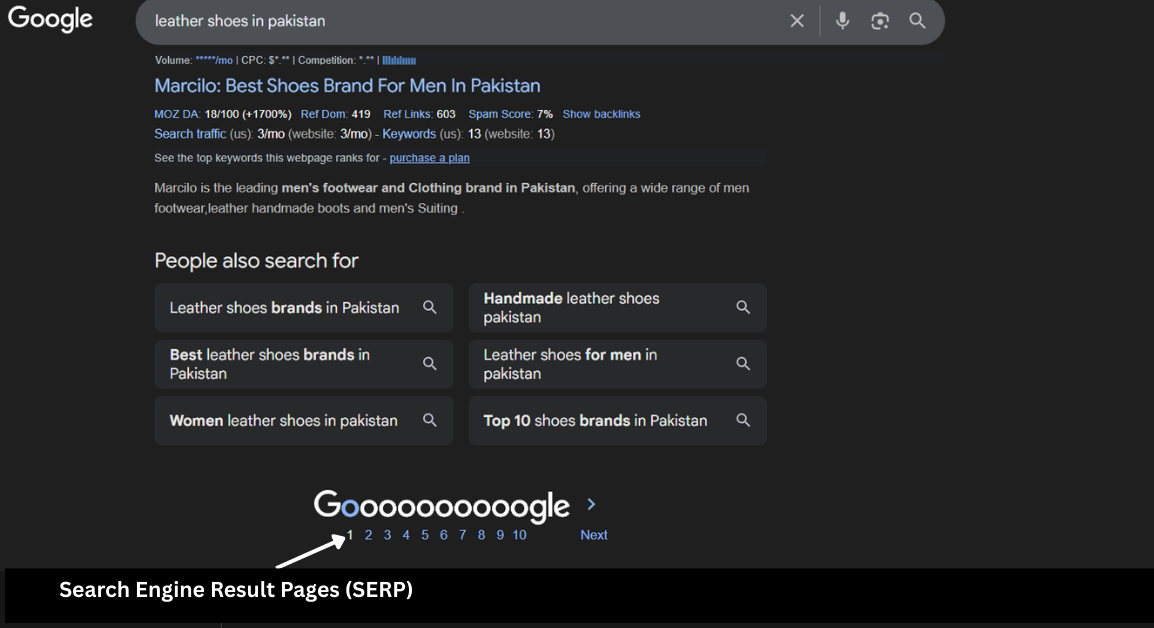
    For example, if someone searches for a leather shoes in pakistan, the search engine shows a list of websites related to that topic. That list is called the SERP.

    A SERP can include:

    • Paid listings
    • Organic listings
    • Images
    • Videos
    • Featured answers

    Search engines use algorithms to decide which websites should appear and in what order. Websites that are properly optimized have a better chance of appearing higher in the organic results.

    search engine result pages

    If you are new to optimization, you can read our beginner guide on What Is SEO? Complete Introduction for Beginners to understand how websites rank on search engines.

    Why the First Page Is So Important

    The first page of SERP is extremely important for any website. Most users do not move to the second or third page of search results.

    When people search online, they usually click on one of the top results they see first. This means websites that appear on the first page receive most of the traffic.

    If your website is on the second page, it becomes difficult for users to find it. That is why SEO focuses strongly on helping websites reach the first page.

    Ranking on the first page increases:

    • Visibility
    • Website traffic
    • Brand trust
    • Business opportunities

    Paid ads can also appear on the first page, but they remain there only while payment continues. Organic rankings require effort and optimization, but they can provide long term benefits.

    If you want to understand the difference between paid and organic results, you can read our blog Paid Marketing vs Organic SEO on Search Engines.

    User Behavior on SERP

    Understanding user behavior is very important in SEO.

    When users search for something, they usually:

    • Type a keyword
    • Scan the first few results
    • Click on the most relevant or trusted link

    Users often read the title and meta description before clicking. If the title clearly matches their search intent, they are more likely to click.

    Most users trust organic results more than paid ads because organic listings appear naturally based on relevance.

    Users also prefer simple, clear, and helpful content. If a website provides value, users stay longer. If not, they quickly return to the search results page.

    This behavior tells us one important thing. Ranking alone is not enough. Your content must also satisfy the user.

    Final Thoughts

    SERP means Search Engine Results Page. It is a page that is shown when a user searches for a keyword in a search engine.

    The first page is a very important page because most people click on results from this page. Only a few people go to the second page.

    Learning how SERP works can give you an idea of why SEO and optimization are important. When you have a website that is on the first page and contains relevant content, you can gain traffic.

    If you want to learn SEO in detail and understand how to rank websites on search engines, you can visit our SEO Course page to explore the complete training program.

  • Paid Marketing vs Organic SEO on Search Engines

    Paid Marketing vs Organic SEO on Search Engines

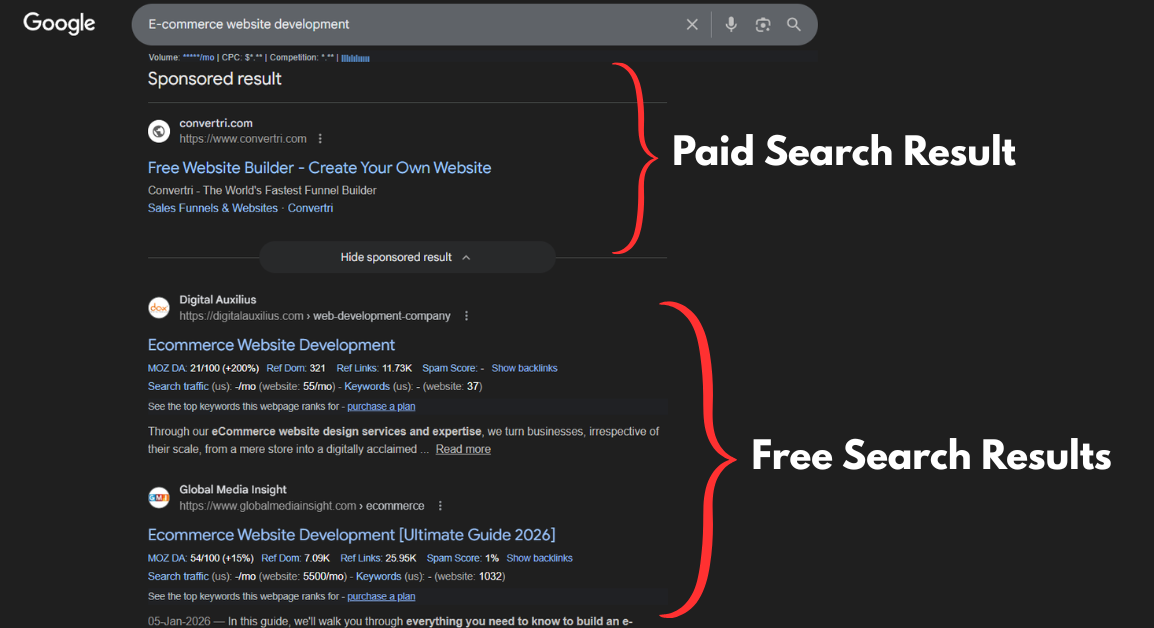
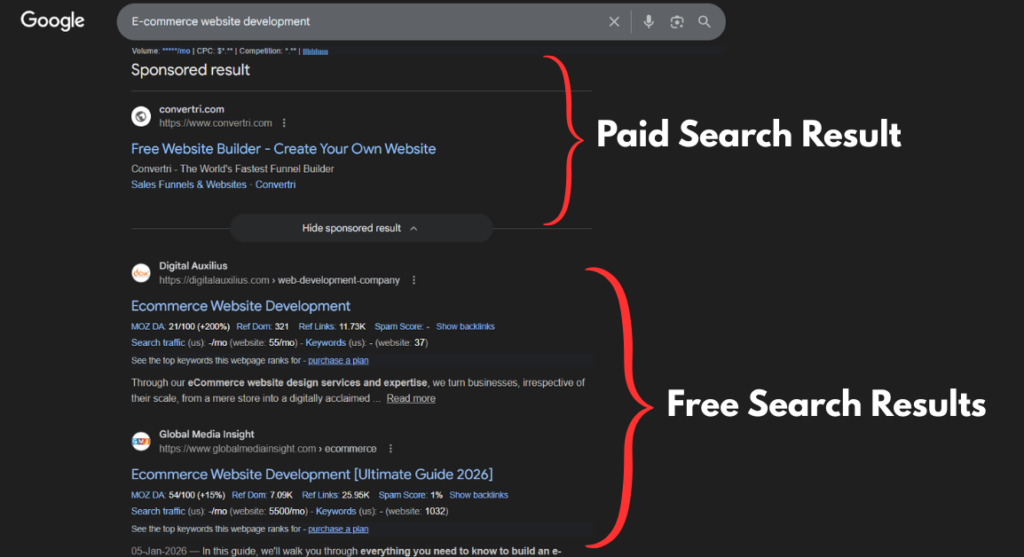
    Search engines like Google, Yahoo, or Bing display different types of website links when we search for a particular thing on the Internet. If we enter a keyword in the search engine, the search engine will display the result on a page, which is known as the SERP, or the Search Engine Result Page. On the SERP page, we can see that there are both paid and unpaid links.

    In this blog, we will be able to understand the concept of paid listings as well as organic listings, along with the difference between them, which is explained in a way that even a beginner can easily understand.

    What Are Paid Listings on Search Engines

    Paid listings are the links that appear on the search engine because a company has paid money to show them there. This part is also known as paid marketing on search engines.

    When a business pays the search engine, its website link appears in the paid section. This method is often called Pay Per Click. It means the company pays money every time someone clicks on their link. Sometimes the cost per click can be very high depending on competition.

    For example, if a company pays to show its ad on Google, its website will appear only on Google. If the company wants to appear on Bing or Yahoo, it must pay them separately.

    Another important part of paid marketing on search engines is that if a company stops making a payment, its advertisement will no longer appear on the search engine results page.

    Only about 20 percent of users click on paid listings. Most people prefer natural search results and trust them more than ads.

    What Are Organic or Unpaid Listings

    Organic listings are the unpaid results that appear on the search engine. The term organic refers to the term natural. The websites appear on the first page of the search engine due to proper optimization of the website according to the standards of the search engine.

    In the case of organic listings, the website owners do not have to pay money to the search engine to display their websites on the search engine results page. They have to make the content of the website more useful and relevant to the search engines.

    Almost 80 percent of users click on the organic results. This shows that people trust the results of the search engines more than the paid advertisements on the search engines.

    Another major advantage of using the search engines is that if the website appears on the first page of the search engines through proper optimization, it will remain there for a longer period without paying money to the search engines per click. The website will appear on many search engines simultaneously if proper optimization is applied to the websites.

    Unlike the case of the paid listings, the organic links do not disappear immediately, but remain as long as the quality of the website remains.

    Both paid and organic listings are part of a bigger marketing strategy. Paid listings usually follow a push approach, while organic SEO is a strong example of pull marketing. If you wish to know more about the difference between push and pull marketing, you can read our detailed guide on What Is Marketing? Push vs Pull Marketing Explained.

    Key Differences Between Paid and Organic Listings

    Now let us clearly understand the difference between paid and unpaid listings in simple words.

    FeaturesPaid ListingsOrganic Listings
    PaymentPay per clickNo payment per click
    User TrustLower trustHigher trust
    Click RateAround 20 percent users clickAround 80 percent users click
    DurationVisible only while payingCan stay long term
    Search EnginesMust pay each search engine separatelyCan rank on multiple search engines
    SpeedInstant visibilityTakes time to rank
    Long Term ValueShort term trafficLong term stable traffic

    As you can see from the comparison above, organic SEO builds long term value while paid marketing gives quick but temporary results.

    difference between paid and organic listings

    Which One Is Better?

    Both of them have their own importance. Paid marketing is helpful when you want quick visibility. If you want quick traffic, it is helpful.

    For long-term traffic, organic SEO is helpful. With organic SEO, you do not have to pay for every click. That is why many businesses prefer SEO as a long-term approach.

    The main thing behind both of these is to get visitors for your website. With organic SEO, not only do you get visitors, but you also get credibility.

    Final Thoughts

    Search engines show two main types of results. Paid listings appear because businesses pay money. Organic listings appear naturally because websites are properly optimized.

    Most users prefer organic results. Paid results give instant visibility but disappear when payment stops. Organic results require effort and time, but they provide long term benefits.

    If you are a beginner, it’s important to understand both methods clearly. To master Organic SEO on search engines and boost your website’s visibility naturally, our SEO Course is the perfect place to start.

  • What Is SEO? A Complete Beginner’s Guide in 2026

    What Is SEO? A Complete Beginner’s Guide in 2026

    Search engines have become an indispensable part of our everyday lives. Whether we are looking for information, comparing products, or searching for services, platforms like Google, Yahoo, and Bing are often our first destination. When a user types a query into a search engine, it generates a list of relevant web pages that best match the search intent. The terms or phrases entered by the user to perform this search are known as keywords.

    Search engines may generate and display thousands, even millions, of results for a single query, yet the majority of users rarely look beyond the first page. In fact, only a small percentage of people proceed to the second page of results. Because of this behavior, it becomes essential for websites to secure top positions in search engine rankings. This is precisely where Search Engine Optimization, commonly known as SEO, plays a vital and strategic role in improving visibility and driving organic traffic.

    This blog post will explain SEO in clear and simple language, especially designed for beginners who are curious to understand how search engines work and how SEO will shape online visibility in 2026.

    What Is SEO?

    SEO stands for Search Engine Optimization. The word optimization means improving something to make it more effective, efficient, and capable of delivering better results.

    Search Engine Optimization is the practice of enhancing a website in accordance with the guidelines and standards set by search engines. When a website aligns with these rules, search engines can more easily understand its content, structure, and relevance. As a result, the website becomes more likely to appear in front of users who are searching for related keywords and topics.

    In 2026, search engines have become far more intelligent and sophisticated, yet their core objective remains unchanged: to deliver the most helpful, accurate, and relevant results to users. SEO helps websites align with this objective by making their content clear, structured, and meaningful. In essence, SEO allows websites to communicate effectively with search engines so they can be properly understood, evaluated, and presented to the right audience.

    SEO is not simply about getting a website listed on search engines. Rather, it is about clearly communicating the value, purpose, and relevance of a website so that search engines can accurately understand what it offers. When a website consistently provides useful content, follows best practices, and builds credibility, search engines develop trust in it. This trust ultimately leads to higher visibility and better rankings in search results.

    Types of SEO

    SEO is not a single task. It is divided into different types based on how a website is improved. The main types of SEO are:

    • On page SEO
    • Off page SEO
    • Technical SEO

    Each type has its own role in helping websites appear on search engines.

    • On page SEO focuses on website content and keywords.
    • Off page SEO focuses on website popularity and links.
    • Technical SEO focuses on website structure and performance.

    These types work together to improve website visibility.

    Why Is SEO Important in 2026?

    Every website needs visitors. Without visitors, a website is worthless. Search engines are one of the largest sources of visitors. Competition on the internet in 2026 is greater than ever before. Thousands of new websites are launched every day. If a website is not optimized, it remains hidden among millions of other web pages.

    SEO makes websites visible. When a website is displayed on the first page, more people click on it. This boosts traffic and helps businesses, services, and individuals connect with their target audience. SEO is particularly important because it attracts visitors who are already searching for something particular.

    Why Do Websites Appear on Search Engines?

    Search engines are constantly striving to deliver the most accurate and valuable results to users. Whenever someone enters a search query, the search engine analyzes the intent behind it and works to present websites that are highly relevant, trustworthy, and aligned with the user’s needs.

    Websites are displayed on search engines because they have content related to the searched keyword. If a website has valuable information and is following the guidelines of the search engine, then it has a higher chance of being displayed on the first page.

    In 2026, search engines are analyzing content more thoroughly, but relevance and clarity are still the most important considerations. SEO assists websites in being relevant to these considerations so that search engines can easily understand and display them.

    What is a Keyword? Role of Keywords in Search Results

    Keywords refer to the phrases that people search using search engines. Search engines rely on keywords to link websites that match the search query.

    Search Engine Optimization assists website owners in using the correct keywords in their content. When the keywords are similar to the searches that people conduct, search engines link the website to the relevant audience.

    Using keywords in an organic manner helps websites to appear in search results without confusing people.

    Meaning of Optimization in SEO

    Optimization is the process of making something better in order to get better results. When it comes to SEO, optimization refers to the process of modifying a website in such a way that it becomes easier for search engines to understand. This is not only done for search engines but also for users. Optimization involves the process of making the content of a website better, arranging pages in a proper manner, and presenting information in a clear and readable format. An optimized website provides a good experience for both users and search engines.

    By the year 2026, optimization is all about clarity, usefulness, and structure, and not tricks.

    How Optimization Helps Search Engines

    Search engines use automated systems to read websites. If a website is confusing or poorly organized, search engines struggle to understand it.

    Optimization eliminates confusion. It informs search engines about the website’s content. When search engines understand websites correctly, they trust the website and rank it higher in search results. Trust between search engines and websites enables websites to rank higher in search results.

    SEO Is a Long Term Strategy

    SEO is not an overnight process. It does not provide results overnight. Search engines take time to analyze and rank websites. However, once a website begins to rank, the benefits will last longer. SEO provides long-term visibility and traffic without having to pay search engines for each click. In 2026, SEO remains one of the most effective and affordable methods of increasing a website.

    Final Thoughts

    SEO is the foundation of online visibility in 2026. It assists websites in getting search engine results, gaining the correct audience, and organically growing. For beginners, learning about SEO is the initial step in acquiring knowledge about digital marketing, freelancing, or online business. A solid foundation facilitates advanced learning. This foundation will enable you to proceed with confidence in the world of search engines. This blog post focuses on the basics. The next blogs will discuss other aspects in a step-by-step manner.