


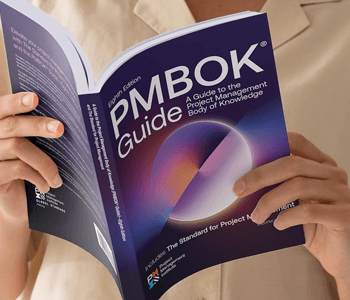
The world of project management has evolved dramatically over the past decade. From the rigid structure of PMBOK 6 to the principle driven philosophy of PMBOK 7, professionals across industries have witnessed significant transformation. Now, with the arrival of the A Guide to the Project Management Body of Knowledge (PMBOK Guide), the profession enters a new chapter that blends structure with flexibility, governance with agility, and tradition with innovation.
If you felt confused navigating versions 6 and 7, you’re not alone! PMBOK 8 restores balance. It synthesizes the strengths of earlier editions while addressing modern realities such as hybrid delivery models, artificial intelligence, sustainability, and dynamic stakeholder expectations.
PMBOK 8th Edition Explained: A New Era of Balanced Project Management
Let’s explore what truly makes PMBOK 8 a milestone in project management.
Why PMBOK 8 Exists
The 8th edition was not a minor update. It was shaped by tens of thousands of practitioner insights, expert panels, and real-world feedback.
The goal was simple yet ambitious to create a guide that reflects today’s fast moving, hybrid, AI enabled world while preserving the foundational structure that project managers value.
Rather than swinging between extremes, rigid processes in version 6 and abstract principles in version 7, PMBOK 8 offers a thoughtful equilibrium.
From Process Groups to Focus Areas
One of the most noticeable changes is terminology. What were once called Process Groups are now known as Focus Areas. The familiar flow remains intact:
- Initiating
- Planning
- Executing
- Monitoring and Controlling
- Closing
However, these are no longer strict, linear steps. They are flexible guides that support predictive, agile, and hybrid approaches.
Similarly, Knowledge Areas are now referred to as Performance Domains. A refined term that emphasizes outcomes rather than theoretical compartments.
The Seven Performance Domains
At the heart of PMBOK 8 are seven interconnected performance domains. These are not abstract ideas; they represent the real forces that shape project success.
To understand them clearly, imagine you are developing a customer portal application. Each domain influences how that project unfolds.
1. Governance
Governance ensures alignment with organizational goals, policies, compliance requirements, and oversight structures.
Before writing even a single line of code for your application, governance asks:
Does this meet security standards? Is it compliant with data protection laws? Has leadership approved the initiative?
Governance may feel bureaucratic at times, but it prevents catastrophic setbacks or “surprises”, later. A project that ignores governance may launch successfully only to be blocked at deployment due to regulatory violations. Remember, governance includes, organizational policies, regulatory requirements, legal compliance, security standards, data protection laws, and approval processes. So, if a project team focuses only on building features and meeting deadlines without checking compliance requirements, they might technically “finish” the product. But that doesn’t mean the organization can legally or ethically release it.
Project teams sometimes think, “Let’s build first, fix compliance later.”, governance is not something you “add” at the end. It must be embedded from the beginning.
Regulatory and organizational controls are not obstacles rather they are protective frameworks.
2. Scope
Scope defines what is included and equally important and also what is not included in your project. For your customer portal app, scope may include login functionality, dashboards, user profiles, and payment integration. Chatbot support or mobile expansion may belong to phase two.
Scope is the Art of Defining Boundaries
Disciplined scope management does not eliminate change. Instead, it ensures change is evaluated strategically. Scope control builds trust and protects timelines.
What Scope Really Means?
Scope answers three fundamental questions:
- What are we building?
- What exactly does “done” look like?
- What is intentionally excluded?
Product Scope vs Project Scope
There are two dimensions to scope:
Product Scope
This defines the features and functions of the final deliverable. For example, in your customer portal app:
- Login functionality
- Dashboard
- User profile
- Payment integration
That is product scope.
Project Scope
This defines the work required to deliver that product. For example:
- Designing UI
- Developing backend APIs
- Testing payment gateway
- Performing security audits
Product scope = What we deliver
Project scope = Work required to deliver it
Confusing the two leads to misalignment.
Why Scope Creep Happens
Scope creep is the uncontrolled expansion of scope without adjusting schedule, cost, or resources. It usually happens because:
- Requirements were not clearly defined
- Stakeholders were not aligned
- There is no change control process
- The project manager wants to “please everyone”
- There is weak governance
Scope creep rarely happens in one dramatic moment. It happens gradually:
- “Just one small change…”
- “Can we also add this feature?”
- “It won’t take much effort…”
Each small addition seems harmless until the timeline slips and the budget explodes. Previously known as cost management, this domain governs budgeting, expenditure tracking, and financial performance. Finance is not about cutting costs blindly. It is about maximizing value within budget constraints.
In your portal app example, monitoring cloud infrastructure expenses, developer hours, and integration costs ensures financial discipline. Smart spending may sometimes require strategic investments to reduce long-term costs.
3. Schedule
The schedule domain focuses on sequencing activities, estimating durations, and managing timelines. While earlier editions broke scheduling into multiple processes, PMBOK 8 consolidates these into a more streamlined approach, yet the underlying discipline remains intact.
Great project managers understand that schedules are living artifacts. They evolve with reality. Adaptive scheduling increases the likelihood of on time delivery. Stakeholder engagement combines traditional stakeholder management and communications management into a unified domain. Your business sponsor, IT operations, end users, security teams, and finance department all carry distinct expectations. Their feedback must be gathered continuously, not just at kickoff.
Effective stakeholder management is proactive. It fosters collaboration, resolves conflicts early, and strengthens alignment.
4. Resources
Resources encompass both human talent and physical or digital assets.
Assigning team members is only the beginning. Resource management involves skill assessment, workload balancing, tool availability, and performance optimization.
An understaffed project or inadequately trained team can derail progress regardless of planning excellence.
5. Risk
Risk management involves identifying uncertainties, assessing impact, and planning responses.
In your app development scenario, risks might include payment gateway failures, cloud outages, cybersecurity vulnerabilities, or key personnel turnover.
PMBOK 8 reinforces that risk includes both threats and opportunities. Positive risks or opportunities can accelerate competitive advantage.
A Return to Structure but with “Flexibility”
One of the most welcomed changes in PMBOK 8 is the reintroduction of processes now reduced from 49 (in version 6) to 40. These processes are non-prescriptive and adaptable. This means project managers regain structural clarity without being confined to rigid waterfall methodologies.
It bridges what practitioners appreciated in version 6 with the adaptability introduced in version 7.
Artificial Intelligence Enters the Conversation
For the first time, PMBOK includes a dedicated appendix on Artificial Intelligence. It addresses:
- AI adoption strategies
- Automation use cases
- Ethical considerations
- Responsible implementation
This signals the profession’s recognition that AI will increasingly shape scheduling, forecasting, reporting, and decision support systems.
Sustainability Becomes a Core Principle
Sustainability is no longer peripheral. It is elevated to a central principle. Projects must now consider environmental, social, and economic impact as integral components of delivery.
A New PMO Appendix
PMBOK 8 introduces guidance on Project Management Offices (PMOs), maturity levels, “customer centric” approaches, and “value driven” governance.
This addition supports organizational leaders, transformation teams, and enterprise level project strategists.
The Evolution in Perspective
Eighth edition respects the discipline of structured planning while embracing modern hybrid and agile realities. If we step back and observe the journey:
- Version 6 emphasized control, documentation, and detailed process structure.
- Version 7 shifted toward principles, adaptability, and value delivery.
- Version 8 harmonizes both approaches, offering clarity with flexibility.
Why This Matters for PMP Aspirants
Understanding PMBOK 8 is not just about passing an exam. It is about evolving as a professional. The PMP exam now reflects this balanced philosophy assessing both structured execution and adaptive leadership.
The concepts in this blog have been explained in a clear, structured, and practical manner to give you strong foundational understanding. However, if you truly want to master these concepts in depth, interact live, ask real time questions, and benefit from the vast practical and diverse experience of Sir Shahid Naseer, we invite you to join us. For the best PMP certification training and a guided journey toward success, join us and elevate your project management career to the next level.
Mastery of the seven performance domains prepares you to orchestrate complex systems rather than merely manage tasks.
Final Thoughts
Project management continues to evolve alongside technology, globalization, and societal expectations.
PMBOK 8 does not discard the past. It refines it. It simplifies terminology, restores clarity, integrates innovation, and strengthens practical application.
In an era of AI, sustainability, and hybrid delivery models, this edition provides a robust yet adaptable framework. The future will undoubtedly demand further evolution. But for now, PMBOK 8 offers the balance that modern project leaders have been seeking.
As the profession advances, one truth remains constant:
Great projects are not built by chance. They are built by disciplined, informed, and visionary project managers.